
Collets play a critical role in CNC machining. They hold tools with precision. Even small errors in handling can affect accuracy. Many shopfloor issues come from incorrect collet usage, not from machines or cutting tools.
Understanding Common Shopfloor Mistakes While Using Collets helps improve consistency. It also reduces tool wear and prevents rework.
Collets directly influence runout, gripping force, and tool stability. Poor clamping leads to vibration. This affects surface finish and dimensional accuracy.
Different collet systems behave differently. You can explore ER collet systems to understand how precision holding works in CNC environments.
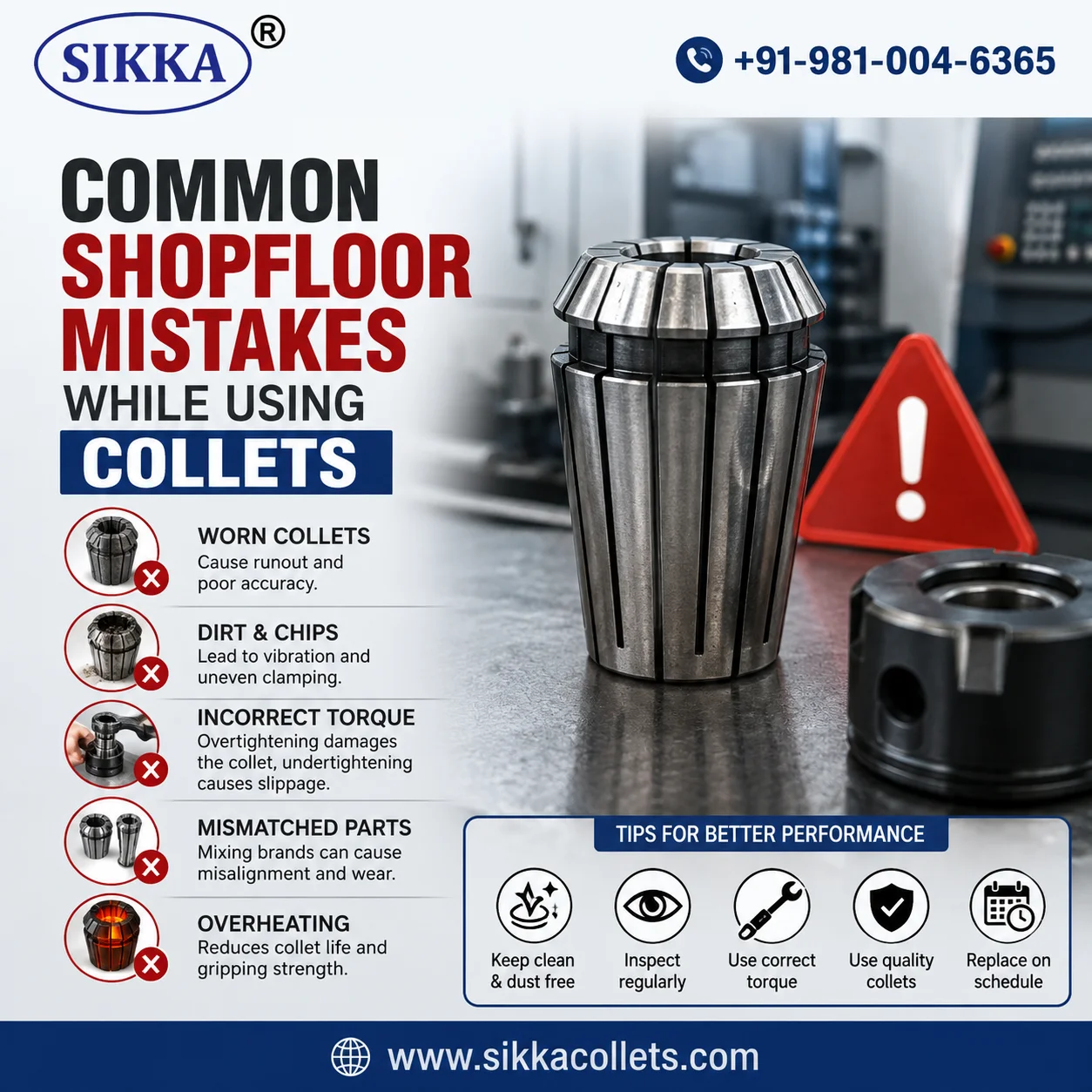
Quick Summary of Common Shopfloor Mistakes While Using Collets
| Mistake | Impact | Quick Fix |
|---|---|---|
| Using worn collets | Runout increases | Replace on schedule |
| Wrong tool size | Poor grip | Match diameter exactly |
| Dirty collet | Vibration | Clean before use |
| Incorrect torque | Tool slipping | Use torque wrench |
| Mixing brands | Misalignment | Use compatible sets |
1. Using Worn or Overused Collets
This is one of the most common shopfloor mistakes. Collets wear out gradually. Micro cracks and fatigue reduce gripping force.
Worn collets cause runout. They also lead to vibration during cutting. This reduces tool life.
Regular inspection is important. You can refer to how to identify worn-out collets for better decision making.
2. Incorrect Tool Diameter Selection
Every collet has a defined clamping range. Using tools outside this range is risky.
An oversized tool stresses the collet. An undersized tool reduces grip strength. Both conditions affect machining stability.
Proper sizing improves accuracy. Learn more about choosing the correct collet size before setup.
3. Ignoring Cleaning Before Installation
Dust and chips are common on shopfloors. Even a small particle affects alignment.
Dirty collets create uneven clamping pressure. This leads to chatter and poor finish.
Cleaning should be part of daily routine. Follow collet cleaning best practices to maintain precision.
4. Improper Tightening Torque
Torque directly affects gripping force. Too much torque damages the collet. Too little torque causes tool movement.
Manual tightening creates inconsistency. A torque wrench ensures repeatable results.
You can explore torque capacity of ER collets to understand correct limits.
5. Using Damaged or Low-Quality Collets
Cracked collets should never be used. Even small damage affects performance.
Low-quality collets lack proper heat treatment. They fail under load.
High-quality materials ensure better grip. Learn about collet materials and durability for better selection.
Real Shopfloor Symptoms You Should Not Ignore
Operators often notice problems but miss the root cause. Many of these issues come from collet mistakes.
- Tool slipping during cutting
- Uneven surface finish
- Excessive vibration
- Burn marks on tool shank
- Frequent tool breakage
These symptoms indicate poor tool holding. You can check common collet-related machining problems for deeper understanding.
Collet Setup and Components
Proper assembly is important. Each part plays a role in clamping accuracy.
6. Mixing Incompatible Collet, Nut, and Holder
This is a frequent issue on busy shopfloors. Operators often mix brands assuming they are interchangeable.
Small tolerance differences create alignment errors. This increases runout and reduces clamping efficiency.
Using matched systems improves consistency. You can understand compatibility better through comparison of collets and other tool holders.
7. Overheating During Machining
Heat affects collet performance. Excess temperature reduces elasticity of the collet material.
This leads to weak gripping force. Over time, it causes permanent damage.
Proper coolant flow is important. Material selection also plays a role. Learn more about heat resistance in collets.
8. Leaving Tools Clamped for Long Duration
Keeping tools clamped for long periods compresses the collet. This reduces its spring action.
Loss of elasticity leads to uneven clamping. It also affects accuracy in future operations.
It is better to release tools after use. This simple habit increases collet life.
9. Using Collets Beyond Their Intended Purpose
Collets are designed for precision holding. They are not suitable for heavy torque operations.
Using them for roughing or non-round tools damages the structure. It also increases risk of tool failure.
For heavy applications, consider alternative systems. Explore other workholding solutions for better suitability.
10. Ignoring Routine Inspection and Maintenance
Many shops skip regular checks. This leads to unexpected failures.
Inspection helps detect wear early. It prevents sudden breakdowns and production loss.
Follow proper maintenance practices. Refer to collet maintenance tips for guidance.
Collet vs Other Tool Holding Systems
| Tool Holder | Best Use |
|---|---|
| Collets | Precision and general machining |
| Hydraulic Chuck | High accuracy finishing |
| Shrink Fit Holder | High-speed machining |
| End Mill Holder | Heavy cutting |
Each system has its role. Choosing the right one improves machining results.
Checklist Before Installing a Collet
- Clean collet and nut properly
- Inspect for cracks or wear
- Verify tool diameter
- Use correct torque setting
- Check holder compatibility
This checklist helps avoid common shopfloor mistakes while using collets.
Cost Impact of Common Shopfloor Mistakes While Using Collets
Collet mistakes affect more than just accuracy. They increase operational costs.
Tool breakage leads to frequent replacements. Poor finish results in rejected parts. Machine downtime reduces productivity.
Incorrect usage also impacts overall efficiency. You can explore how collets improve production efficiency when used correctly.
Pro Tips for Better Collet Performance
- Always store collets in dry conditions
- Use torque wrench instead of manual tightening
- Avoid mixing different brands
- Replace collets after defined usage cycle
- Keep tool shanks clean and damage-free
FAQs
How often should collets be replaced?
Replacement depends on usage. Regular inspection helps decide the right time.
Can one collet hold different sizes?
Collets have a limited range. Staying within that range ensures proper grip.
Why does runout increase over time?
Wear, dirt, and incorrect usage are common reasons.
Is torque really important?
Yes. Correct torque ensures stable clamping and reduces vibration.
About Sikka Precision Technologies
Sikka Precision Technologies is a professionally operated and owned company. It produces high-quality precision collets. The company uses high-grade steel in manufacturing. This ensures durability and consistent performance in machining applications.
You can also explore more about choosing the right supplier through this detailed guide.
Final Thoughts
Most machining errors are preventable. Proper collet usage plays a key role in maintaining accuracy. Small improvements in handling can lead to better results on the shopfloor.