
Most CNC issues do not start with machine failure. They start with small mistakes during daily operation. Collet handling is one of the most ignored areas on the shopfloor.
A structured routine helps operators maintain consistency. It improves tool holding, reduces runout, and extends component life.
This guide provides a practical daily CNC operator checklist for collet handling. It focuses on real actions that operators perform every shift.
Understanding how ER collet systems work helps in identifying problems early and maintaining better control during machining.
Collets work under pressure and high speed. Even a small issue affects performance.
Improper handling leads to tool slippage. It also increases vibration and affects surface finish.
Ignoring daily checks results in gradual wear. This reduces clamping accuracy.
Many machining problems begin with poor collet condition. These problems are avoidable with routine checks.
A daily CNC operator checklist for collet handling ensures that basic steps are not missed during busy production cycles.
Pre-Shift Checklist Before Starting the Machine
Operators should begin every shift with a systematic inspection. This reduces the risk of errors during machining.
Clean the Collet and Surrounding Area
Remove chips from the chuck and tool holding area. Even small particles affect clamping.
Clean the collet, nut, and holder thoroughly. Do not rely only on compressed air.
Inspect Collet Condition
Check for cracks, wear, or deformation. A damaged collet should not be used.
Surface marks inside the collet indicate uneven pressure.
Verify Correct Collet Size
Using the wrong size reduces grip strength. It also increases vibration.
Refer to collet size selection guide before tool installation.
Check Proper Seating
Ensure the collet is seated correctly inside the nut. Improper seating leads to misalignment.
Check Hydraulic and Coolant Systems
Verify chuck pressure. Low pressure causes job slippage.
Check coolant level and flow. Proper cooling reduces heat impact on collet performance.
Warm Up the Spindle
Run the spindle for a few minutes before heavy machining. This stabilizes operating conditions.
Checklist During Machine Operation
Monitoring during machining is as important as setup. Operators should stay alert to small changes.
Observe Vibration Levels
Excess vibration indicates improper clamping or imbalance.
If vibration increases, stop the machine and check collet seating.
Listen for Unusual Sounds
Abnormal noise often signals tool movement or poor grip.
Monitor Tool Stability
Watch for tool deflection or movement during cutting.
Instability affects accuracy and surface finish.
Check Chip Accumulation
Chips around the chuck area can enter the collet system.
Remove buildup before it affects performance.
Maintain Coolant Flow
Inconsistent coolant flow increases heat. Heat reduces clamping efficiency.
Proper monitoring helps operators respond before problems grow.
Post-Shift Checklist After Machining
End-of-shift practices are often ignored. They are important for maintaining collet life.
Clean All Components
Remove chips and residue from collet, nut, and holder.
Do not store components in dirty condition.
Inspect for Wear
Check for visible damage after use. Early detection prevents failure in the next shift.
Apply Light Lubrication
Use a small amount of oil to prevent corrosion.
Avoid excess lubrication. It attracts dust and chips.
Store Properly
Keep collets in a clean and dry place. Avoid mixing used and unused components.
Following proper handling and cleaning practices helps maintain consistent performance.
Collet-Specific Handling Checklist for Operators
General CNC maintenance is not enough. Collet handling requires specific attention.
Always clean the collet before inserting the tool.
Do not use damaged or worn-out collets.
Avoid mixing collets and nuts from different systems.
Use correct tightening methods. Incorrect tools damage the collet.
Check runout periodically to maintain accuracy.
Understanding collet clamping mechanism helps operators apply correct force during installation.
Common Operator Mistakes That Reduce Collet Life
Many problems come from repeated small mistakes.
Skipping cleaning steps allows chips to enter the collet.
Using one collet for multiple tool sizes reduces grip quality.
Ignoring minor vibration leads to long-term damage.
Over-tightening affects elasticity and causes deformation.
Improper storage leads to contamination and corrosion.
These issues are explained further in common collet mistakes seen in machining environments.
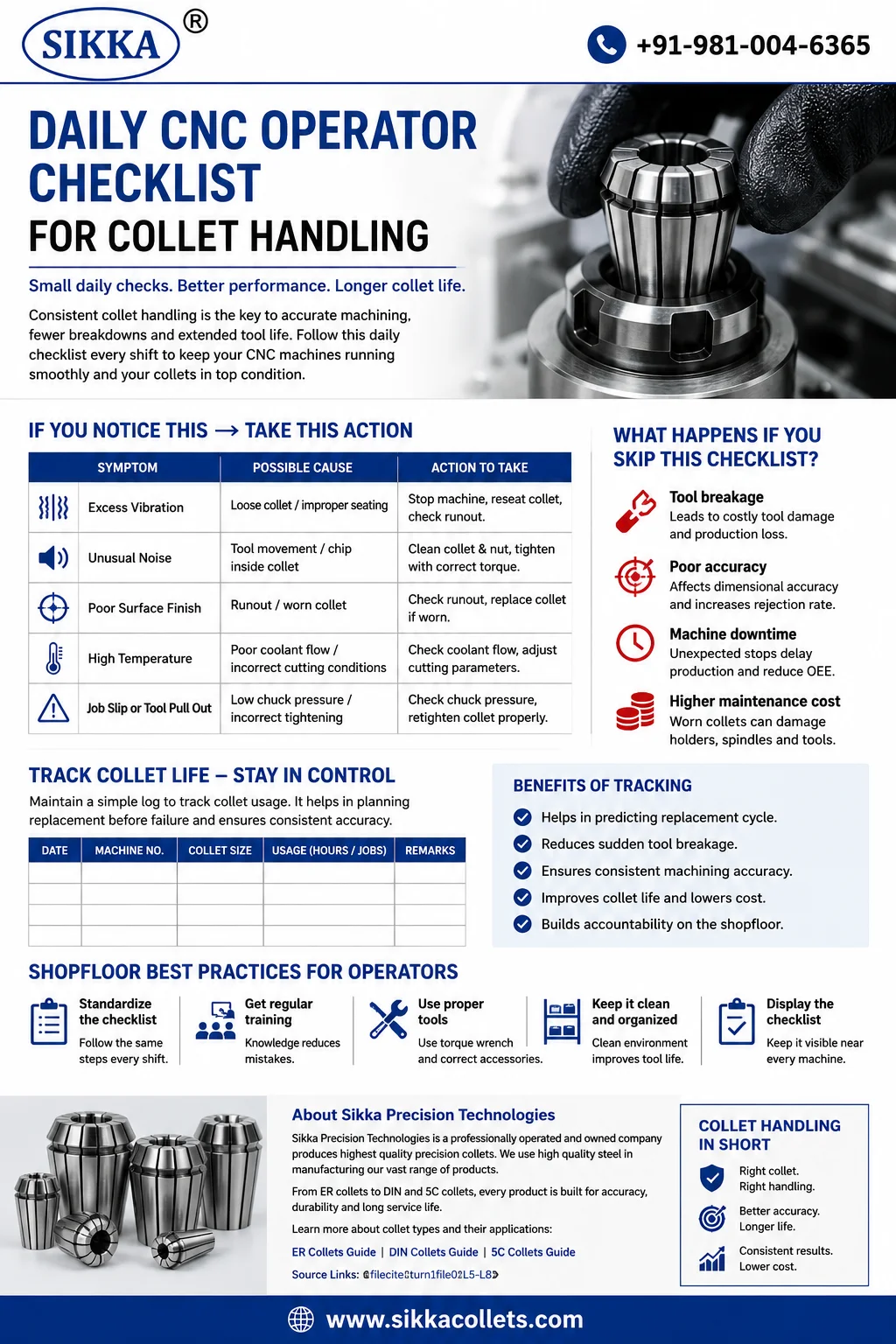
If You Notice This → Take This Action
Operators often notice small issues but ignore them. Quick action prevents major failures.
If vibration increases, stop the machine. Check collet seating and tool alignment.
If you hear unusual noise, inspect the collet and nut. Clean and tighten properly.
If surface finish drops, check runout. Replace the collet if wear is visible.
If temperature rises, verify coolant flow and cutting conditions.
If tool slippage occurs, check chuck pressure and tightening method.
These quick responses help maintain control during machining.
What Happens If You Skip the Daily CNC Operator Checklist for Collet Handling?
Skipping routine checks leads to gradual problems. These issues are often noticed only after damage occurs.
Tool breakage is a common result. Poor clamping reduces grip and increases stress on the tool.
Surface finish quality drops. Runout and vibration affect dimensional accuracy.
Machine downtime increases. Unexpected stoppages delay production.
Collet damage becomes frequent. Worn components affect the entire tool holding system.
These problems increase cost and reduce efficiency.
Simple System to Track Collet Usage
Tracking usage helps operators make better decisions. It reduces guesswork.
Maintain a basic log for each collet. Record machine hours or number of jobs.
Group collets based on application type. Heavy-duty use reduces life faster.
Mark collets for identification. This avoids mixing new and used components.
Replace collets based on usage and condition. Do not wait for failure.
This system helps extend collet life and maintain consistency.
Understanding Wear Patterns in Collets
Wear develops gradually. Operators should identify early signs.
Internal scoring marks indicate uneven pressure.
Fretting marks on tool shanks show slight movement during operation.
Discoloration suggests heat impact. This affects material strength.
Cracks near slots indicate structural weakness. These collets should be replaced immediately.
Increasing runout is another warning sign. It affects machining accuracy.
Recognizing these patterns helps prevent tool and machine damage.
Impact of Cleaning and Lubrication on Collet Life
Cleaning directly affects performance. It ensures proper contact between surfaces.
Compressed air alone is not enough. Fine particles remain inside the collet.
Use proper cleaning tools. Remove residue from internal surfaces.
Apply light lubrication only where required. Excess oil attracts chips.
Proper cleaning reduces runout and improves clamping efficiency.
Refer to collet cleaning and handling practices for detailed steps.
Collet as Part of the Tool Holding System
Collet performance depends on the complete system. Issues may not come from the collet alone.
Spindle condition affects alignment. Contamination in the taper increases runout.
Collet nut condition impacts clamping force.
Improper assembly creates uneven pressure distribution.
All components must work together for accurate machining.
Understanding tool holding systems helps operators maintain better control.
Cost Impact of Poor Collet Handling
Poor handling increases operational cost.
Tool breakage leads to production loss.
Rework increases due to poor surface finish.
Machine downtime affects delivery timelines.
Frequent replacement of damaged parts increases expenses.
Daily checks help reduce these risks.
Improving Shopfloor Practices
Consistency is key to extending collet life.
Use the same checklist across all shifts. This reduces variation.
Train operators on correct handling methods.
Use proper tools for installation and removal.
Keep the work area clean and organized.
Display the checklist near machines for quick reference.
These practices improve overall machining performance.
About Sikka Precision Technologies
Sikka Precision Technologies is a professionally operated company focused on manufacturing precision collets. High-quality steel is used in the production process to ensure durability and consistent performance.
The company supports a wide range of CNC machining requirements with reliable tooling solutions.
Learn more about selecting the right product in collet selection guide and understand accuracy and tool life balance in machining.
Final Thoughts
The daily CNC operator checklist for collet handling is not just a routine. It is a control system for machining accuracy.
Small checks prevent major failures. Consistent handling improves performance.
Operators who follow structured steps can extend collet life and maintain reliable machining operations.