
Collets are precision components. They require careful handling on the shopfloor. Small mistakes during use can damage the collet. This affects tool holding and machining accuracy.
Safe Handling Practices to Avoid Collet Damage are essential for consistent performance. Proper handling reduces wear, prevents runout, and improves tool life.
Collets work under high clamping pressure. Any contamination or misuse affects their performance.
Improper handling leads to uneven gripping. This results in vibration and poor surface finish. Over time, it increases operational costs.
Understanding how ER collet systems work helps in maintaining proper handling standards.
Quick Checklist for Safe Handling Practices to Avoid Collet Damage
| Action | Purpose |
|---|---|
| Clean before use | Maintain accuracy |
| Inspect for damage | Prevent failure |
| Use correct torque | Ensure proper grip |
| Store properly | Avoid contamination |
| Use correct size | Improve stability |
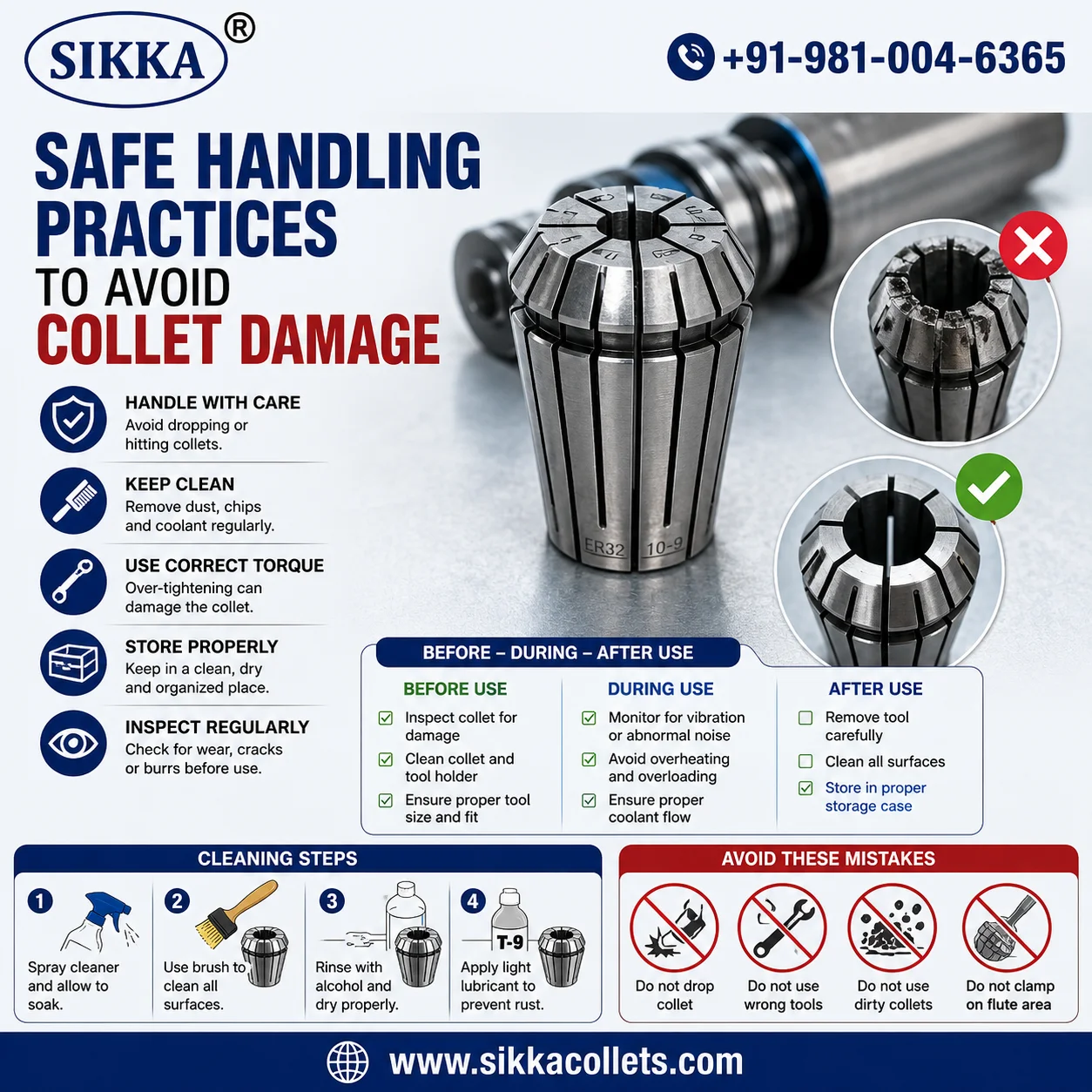
Common Handling Mistakes That Cause Collet Damage
Many issues on the shopfloor come from poor handling habits. These mistakes reduce collet life.
Dropping Collets on Hard Surfaces
Collets are made with precision tolerances. Dropping them causes deformation. Even small dents affect clamping accuracy.
Improper Storage
Loose storage leads to scratches and contamination. Collets should be stored in organized trays.
Using Incorrect Tools for Tightening
Using random tools damages the nut and collet. A proper torque wrench ensures controlled tightening.
Forcing Tool Insertion
Tools should slide smoothly into the collet. Forcing insertion damages internal surfaces.
Collet Cleaning and Maintenance Process
Cleaning is a critical part of safe handling practices to avoid collet damage. Dirt and chips affect clamping.
Follow a simple cleaning routine:
- Apply cleaning solution to remove debris
- Use a soft brush to clean slots and surfaces
- Rinse and dry completely
- Apply light lubrication to prevent rust
You can follow collet cleaning and handling practices for better results.
Collet Damage Indicators You Should Watch
Early detection helps avoid major failures. Operators should check for visible signs of damage.
- Bell mouthing at the opening
- Burrs on clamping surface
- Surface scratches
- Rust formation
- Reduced gripping force
These signs indicate that the collet needs replacement. Ignoring them affects machining quality.
Before, During, and After Use Workflow
Before Use
- Inspect the collet for cracks
- Clean the taper and surfaces
- Verify correct tool size
During Use
- Monitor vibration and noise
- Ensure proper coolant flow
- Avoid excessive heat generation
After Use
- Remove the tool from collet
- Clean all components
- Store in dry and safe place
This workflow supports safe handling practices to avoid collet damage in daily operations.
Understanding Critical Contact Areas
Collet performance depends on multiple contact surfaces. Each area must be clean and undamaged.
The internal clamping surface should be free from residue. The spindle taper must be clean for proper seating.
Learn more about common collet-related issues caused by poor maintenance.
Tool Clamping Best Practices
Correct tool positioning improves stability. The tool shank should cover most of the collet depth.
Avoid clamping on tool flutes. This causes uneven pressure and increases runout.
You can refer to choosing the right collet size for better tool holding.
Storage Best Practices to Prevent Collet Damage
Storage plays a direct role in collet life. Poor storage leads to contamination and surface damage.
Collets should never be kept loose in drawers. Contact with other tools creates scratches. These scratches affect clamping precision.
- Use dedicated trays for each collet size
- Keep storage area dry and dust-free
- Avoid stacking collets over each other
- Store after cleaning, not before
Proper storage supports safe handling practices to avoid collet damage in long-term use.
Critical Areas That Need Regular Attention
Collet performance depends on multiple contact points. Ignoring these areas leads to gradual damage.
The internal surface of the collet must remain clean. Any residue affects grip consistency. The spindle taper must also be free from deposits.
The collet nut is often ignored. Burrs inside the nut damage even new collets. Threads should be checked regularly.
In some systems, thrust bearings are used. These reduce friction during tightening. If movement feels rough, contamination is likely present.
Tool holders also need inspection. Poor contact between holder and spindle causes runout. You can explore tool holder and collet maintenance tips for deeper insight.
Cost Impact of Poor Handling
Ignoring safe handling practices to avoid collet damage leads to higher costs. These costs are not always visible immediately.
Damaged collets reduce tool life. This increases tool replacement frequency. Poor clamping also results in rejected components.
Machine downtime is another factor. Unexpected failures interrupt production. This affects delivery timelines.
Consistent handling improves efficiency. You can understand how collets improve efficiency in production when used correctly.
Advanced Handling Tips for Shopfloor Teams
Basic practices are not enough in high-precision environments. Teams should follow disciplined handling routines.
- Assign responsibility for collet inspection
- Maintain usage tracking for replacement cycles
- Avoid sharing damaged or doubtful collets
- Use only compatible collet and nut combinations
- Train operators on correct insertion techniques
These practices reduce variability in machining performance.
When to Replace a Collet
Collets have a defined service life. Regular inspection helps determine the right time for replacement.
Replace the collet if you notice:
- Visible deformation at the mouth
- Loss of gripping strength
- Persistent runout issues
- Surface corrosion
Using damaged collets affects the entire tool holding system. It is better to replace them early than risk machining errors.
FAQs
How do safe handling practices help avoid collet damage?
They reduce contamination and mechanical stress. This improves accuracy and extends collet life.
Can damaged collets be repaired?
No. Damaged collets should be replaced. Repairing affects precision and safety.
How often should collets be cleaned?
Cleaning should be done regularly. Daily cleaning is recommended in active machining environments.
What causes collet slippage?
Improper torque, dirt, and wear are common causes. Correct handling prevents these issues.
About Sikka Precision Technologies
Sikka Precision Technologies is a professionally operated and owned company. It produces high-quality precision collets. High-grade steel is used in manufacturing. This ensures durability and consistent performance in machining applications.
Final Note
Safe handling practices to avoid collet damage are part of daily machining discipline. Attention to small details improves long-term performance. Consistency in handling leads to better machining results.