
A proper Collet Inspection Checklist for Production Engineers is essential for maintaining machining accuracy, reducing tool wear, and preventing costly machine downtime. Collets play a critical role in holding tools and workpieces securely during machining operations. Even a small defect in a collet can lead to runout issues, poor surface finish, tool breakage, and rejected parts.
This comprehensive Collet Inspection Checklist for Production Engineers covers receiving inspection, daily maintenance, wear monitoring, troubleshooting, and preventive maintenance practices that help maintain consistent production quality.
Collet Inspection Checklist for Production Engineers
Many machining problems originate from worn or improperly maintained collets. A damaged collet can reduce gripping force, increase vibration, and negatively affect machining accuracy.
Following a structured Collet Inspection Checklist for Production Engineers helps:
- Reduce tool runout
- Improve surface finish quality
- Extend tool life
- Prevent spindle damage
- Reduce scrap rates
- Maintain production consistency
- Lower maintenance costs
Receiving Inspection Checklist for New Collets
The inspection process should begin before the collet enters production.
1. Verify Dimensions
Check the collet size using a calibrated micrometer. Ensure the clamping range matches the machine and application requirements.
Engineers can refer to guides on calculating the correct collet size before installation.
2. Inspect Material Quality
Confirm that the collet is manufactured from hardened alloy steel. High-quality materials improve wear resistance and clamping performance.
3. Examine Surface Finish
Inspect the taper, slots, and threads.
Look for:
- Burrs
- Sharp edges
- Surface damage
- Manufacturing defects
4. Verify Accuracy Specifications
Review manufacturer documentation and runout specifications before approval.
Pre-Setup Collet Inspection Checklist
Before every machining operation, production engineers should perform a quick inspection.
Clean All Contact Surfaces
Dirt, chips, and coolant residue can create alignment issues.
- Clean collet slots
- Clean spindle taper
- Clean collet nut
- Use compressed air carefully
Proper cleaning procedures are explained in this guide on collet handling, cleaning, and replacement.
Confirm Correct Collet Size
Never use an oversized or undersized collet.
Incorrect sizing often causes slippage and runout problems.
Learn more about the importance of collet size in machining accuracy.
Inspect Threads
Check for:
- Cross-threading
- Thread wear
- Deformation
- Binding during tightening
Daily Collet Inspection Checklist
A daily inspection routine helps identify early signs of wear.
| Inspection Item | Action |
|---|---|
| Visual Damage | Check for cracks and dents |
| Cleanliness | Remove chips and coolant residue |
| Clamping Performance | Monitor tool grip |
| Surface Condition | Inspect for rust and corrosion |
Daily inspections are a critical part of every Collet Inspection Checklist for Production Engineers.
Weekly Collet Inspection Checklist
Weekly inspections focus on performance verification.
Measure Runout
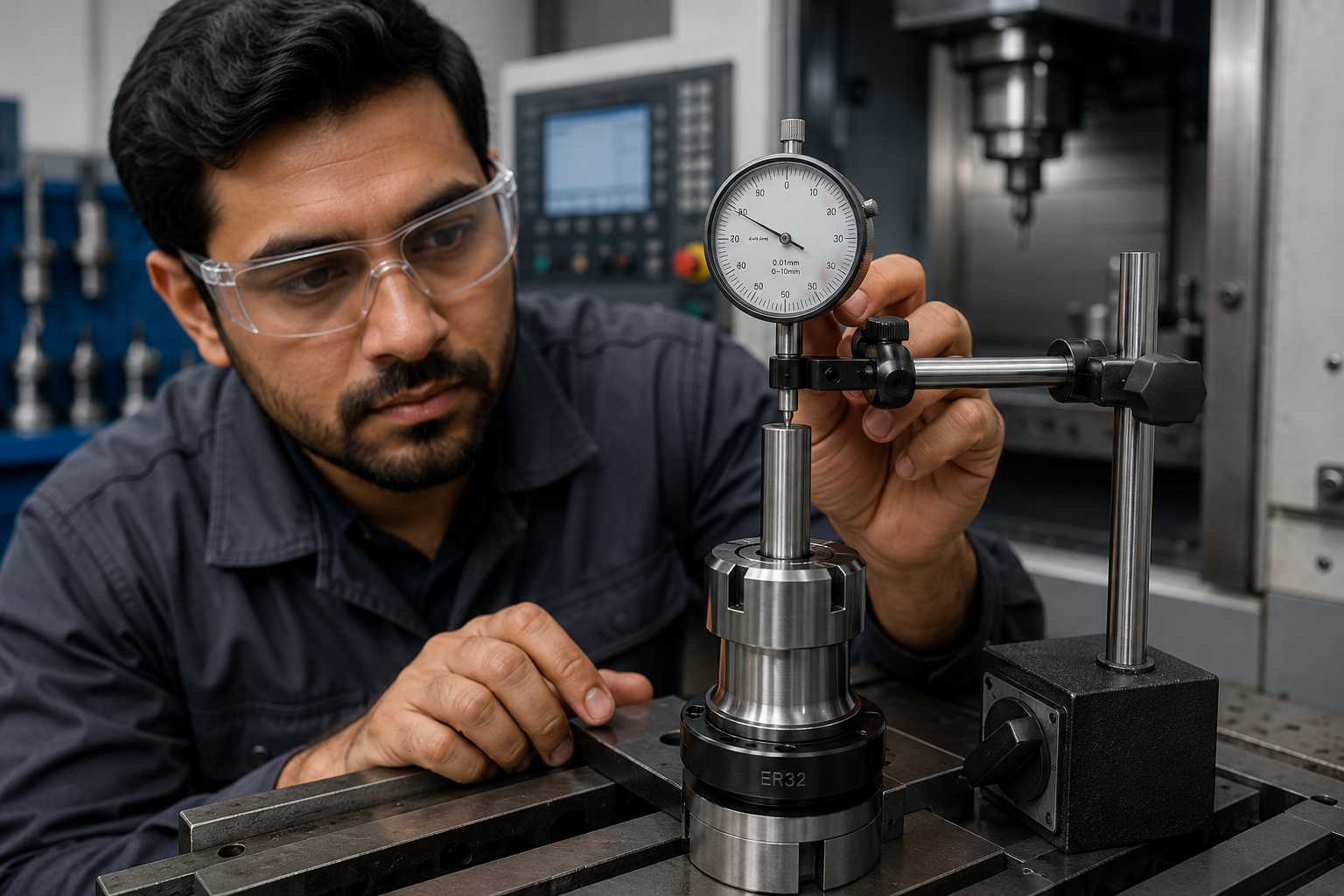
Install a precision test bar and use a dial indicator.
Measure Total Indicator Runout (TIR).
| Application | Recommended TIR |
|---|---|
| General Machining | Below 0.015 mm |
| Precision Machining | Below 0.010 mm |
| High-Speed Machining | Below 0.005 mm |
Runout testing methods are discussed in detail in this article on collet runout testing.
Check Clamping Force
Monitor for tool pull-out during heavy cutting operations.
Reduced gripping force often indicates wear.
Inspect Collet Slots
Check slots for:
- Chip accumulation
- Cracks
- Wear marks
- Distortion
Monthly Collet Inspection Checklist
Monthly inspections evaluate long-term performance.
Bell-Mouthing Inspection
Inspect the gripping bore for uneven wear.
Bell-mouthing reduces gripping accuracy and increases runout.
Wear Pattern Analysis
Review wear patterns to identify improper loading or incorrect setup procedures.
Replacement Review
Assess whether the collet should remain in service or be replaced.
Regular replacement is often more cost-effective than dealing with machining defects.
How to Measure Collet Runout?
A complete Collet Inspection Checklist for Production Engineers should always include runout verification.
- Insert a certified test bar.
- Tighten the collet to the recommended torque.
- Position a dial indicator near the tool tip.
- Rotate the spindle manually.
- Record TIR values.
- Compare results against tolerance requirements.
Excessive runout often indicates collet wear or contamination.
Tools Required for Collet Inspection
Production engineers should keep the following inspection tools available:
- Dial indicator
- Torque wrench
- Micrometer
- Bore gauge
- Precision test bar
- Inspection light
- Compressed air gun
- Cleaning brushes
Common Signs of Collet Failure
One of the most overlooked sections of a Collet Inspection Checklist for Production Engineers is failure identification.
Replace the collet immediately if you observe:
- Cracks around slots
- Bell-mouthing
- Thread damage
- Corrosion
- Excessive runout
- Tool pull-out marks
- Taper wear
You can also review signs of worn collets in this resource on identifying worn-out collets.
Common Causes of Collet Damage
Understanding failure causes helps prevent repeat issues.
- Over-tightening
- Under-tightening
- Incorrect collet size
- Coolant contamination
- Chip buildup
- Poor storage conditions
- Excessive spindle vibration
Many machining issues are linked to improper collet selection.
Collet Troubleshooting Guide
| Problem | Likely Cause | Corrective Action |
|---|---|---|
| Tool Slippage | Worn collet | Replace collet |
| Poor Surface Finish | High runout | Check TIR |
| Vibration | Damaged taper | Inspect contact surfaces |
| Uneven Clamping | Debris buildup | Clean slots thoroughly |
| Rust Formation | Improper storage | Apply rust protection |
Inspection Frequency Matrix
| Inspection Activity | Daily | Weekly | Monthly |
|---|---|---|---|
| Visual Inspection | ✓ | ||
| Cleaning | ✓ | ||
| Runout Testing | ✓ | ||
| Clamping Force Check | ✓ | ||
| Wear Analysis | ✓ | ||
| Replacement Evaluation | ✓ |
Industry Applications Where Collet Inspection Is Critical
Regular collet inspection is especially important in:
- Aerospace manufacturing
- Automotive production
- Medical device machining
- Mold and die manufacturing
- Precision engineering industries
Read how collets support aerospace engineering applications and automotive manufacturing operations.
Expert Recommendations from Sikka Sales Corporation
According to industry experience from Sikka Sales Corporation, regular inspection is one of the most effective ways to improve machining performance and reduce tooling costs.
Sikka Precision Technologies manufactures high-quality precision collets using premium-grade steel for demanding industrial applications. Their recommendations include:
- Verify runout regularly.
- Use correct torque settings.
- Replace worn collets promptly.
- Maintain proper cleaning schedules.
- Store collets in dry environments.
- Select application-specific collets.
Sikka Sales Corporation
31/3F, Street No-1, Anand Parbat Industrial Area, New Delhi – 110005, India
Phone: +91-981-004-6365
Google Map Location:
https://maps.app.goo.gl/iU6Ne2WKYp5DRZkP6
Conclusion
A well-structured Collet Inspection Checklist for Production Engineers helps maintain machining precision, reduce downtime, and improve production efficiency. By following daily, weekly, and monthly inspection procedures, engineers can detect wear early and prevent costly failures.
Regular cleaning, runout verification, proper storage, and timely replacement are the foundations of a successful collet maintenance program. Implementing this Collet Inspection Checklist for Production Engineers will improve machining consistency and extend the life of both tools and equipment.