
Thin-wall components are widely used in aerospace, automotive, medical, and electronics industries. These parts help reduce weight while maintaining strength. However, machining thin-wall components is challenging. Even a small amount of deformation can affect dimensional accuracy and surface finish.
This is where Reverse Taper Collets for Thin-Wall Component Machining become essential. They provide secure gripping, reduce distortion, and improve machining consistency. Manufacturers rely on reverse taper collets to achieve higher precision when working with delicate and thin-walled parts.
What Are Reverse Taper Collets?
Reverse Taper Collets for Thin-Wall Component Machining are specialized workholding devices designed to grip components with minimal distortion. Unlike conventional collets that apply force from the outside, reverse taper collets provide controlled holding force that supports the workpiece while maintaining its shape.
This design improves concentricity and reduces the risk of wall deflection during machining operations. Industries that require tight tolerances often prefer reverse taper collets over traditional workholding methods.
To understand different workholding options, you can also explore workholding solutions beyond collets.
Why Thin-Wall Components Are Difficult to Machine?
Thin-wall components have low rigidity. During machining, cutting forces can easily bend or distort the workpiece.
Common challenges include:
- Wall deflection
- Vibration and chatter
- Poor surface finish
- Dimensional inaccuracies
- Ovality in circular parts
- Spring-back after machining
These issues increase scrap rates and production costs. This is why many manufacturers use Reverse Taper Collets for Thin-Wall Component Machining to improve process stability.
How Reverse Taper Collets Reduce Deformation?
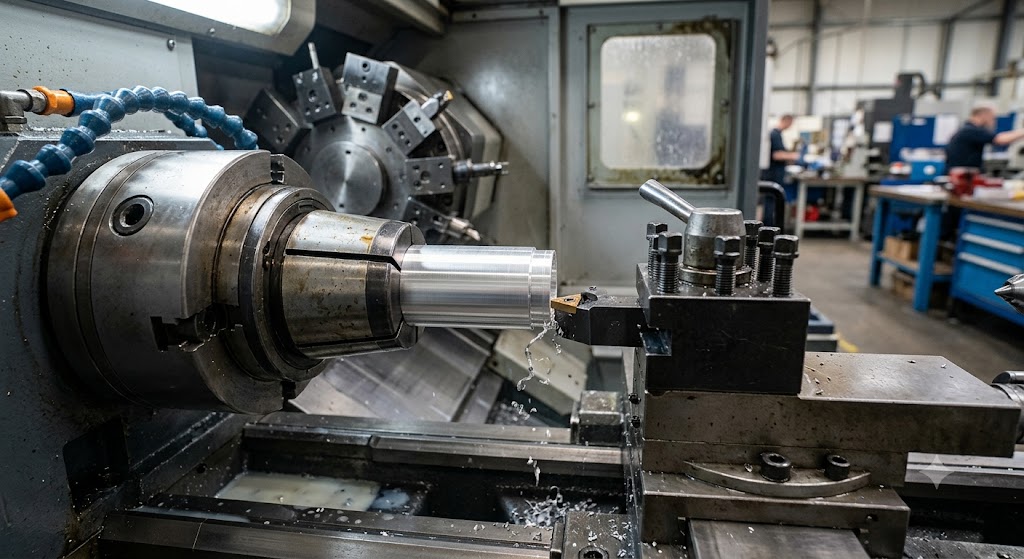
The biggest advantage of Reverse Taper Collets for Thin-Wall Component Machining is their ability to distribute clamping forces more evenly.
Uniform Clamping Pressure
Uneven pressure can distort delicate parts. Reverse taper collets provide balanced gripping force across the contact area.
Improved Concentricity
Better concentricity means lower runout and improved machining accuracy.
Reduced Vibration
Stable workholding minimizes vibration and chatter. This helps achieve better surface finishes.
Higher Repeatability
Manufacturers can achieve consistent results across large production runs.
For additional insights into gripping performance, visit clamping force in collets.
Reverse Taper Collets vs Standard Workholding Methods
| Feature | Standard Collets | Reverse Taper Collets |
|---|---|---|
| Thin-Wall Support | Limited | Excellent |
| Distortion Risk | Higher | Lower |
| Concentricity | Good | Superior |
| Surface Finish | Moderate | Improved |
| Repeatability | Good | Excellent |
Because of these advantages, Reverse Taper Collets for Thin-Wall Component Machining are increasingly used in precision manufacturing environments.
Industries That Use Reverse Taper Collets
Several industries depend on Reverse Taper Collets for Thin-Wall Component Machining.
Aerospace
- Satellite housings
- Aircraft structural parts
- Precision brackets
Read more about applications of collets in aerospace engineering.
Medical Industry
- Surgical instruments
- Implant components
- Medical housings
Automotive Industry
- EV components
- Lightweight housings
- Precision engine parts
Electronics Manufacturing
- Sensor housings
- Precision enclosures
- Thin-wall aluminum components
Best Practices for Thin-Wall Component Machining
Even with Reverse Taper Collets for Thin-Wall Component Machining, proper machining strategies are essential.
Use High-Speed Machining
Higher spindle speeds with lower cutting forces help reduce deformation.
Apply Trochoidal Toolpaths
Dynamic toolpaths reduce radial cutting pressure.
Balance Material Removal
Remove material symmetrically to avoid stress concentration.
Use Sharp Cutting Tools
Sharp tools generate less heat and lower cutting forces.
Optimize Fixturing
Proper workholding is critical for maintaining part stability.
You can also learn more about collet fixtures and CNC collet chucks for precision machining applications.
Reverse Taper Collets vs Expanding Collets
Both systems are effective for precision workholding. However, they serve different applications.
| Feature | Reverse Taper Collets | Expanding Collets |
|---|---|---|
| Thin-Wall Machining | Excellent | Good |
| Part Stability | Higher | Moderate |
| Concentricity | Excellent | Very Good |
| Precision Applications | Best Choice | Suitable |
Learn more about expanding collets and their industrial applications.
Common Mistakes to Avoid
Many machining problems occur because of incorrect setup procedures.
- Using excessive clamping force
- Selecting the wrong collet size
- Poor machine maintenance
- Aggressive cutting parameters
- Ignoring tool wear
- Improper workpiece support
A properly designed Reverse Taper Collets for Thin-Wall Component Machining setup can significantly reduce these risks.
Quality in Reverse Taper Collets
Not all collets are manufactured to the same standards. Precision grinding, material quality, and heat treatment directly impact performance.
High-quality Reverse Taper Collets for Thin-Wall Component Machining offer:
- Longer service life
- Higher gripping accuracy
- Improved repeatability
- Better resistance to wear
- Consistent clamping force
For deeper technical information, visit optimizing reverse taper collets.
Why Choose Sikka Precision Technologies?
Sikka Precision Technologies is a professionally owned and operated company specializing in high-quality precision collets. The company manufactures a wide range of precision workholding products using premium-grade steel and advanced manufacturing processes.
With years of industry experience, Sikka Precision Technologies focuses on delivering reliable and durable solutions for demanding CNC machining applications. Their expertise in Reverse Taper Collets for Thin-Wall Component Machining helps manufacturers improve accuracy, productivity, and process stability.
Sikka Sales Corporation
31/3F, Street No. 1,
Anand Parbat Industrial Area,
New Delhi – 110005, India
Phone: +91-981-004-6365
Google Business Location:
https://maps.app.goo.gl/iU6Ne2WKYp5DRZkP6
Frequently Asked Questions
What are Reverse Taper Collets for Thin-Wall Component Machining?
They are specialized collets designed to hold delicate thin-wall components with minimal deformation and maximum accuracy.
Why are reverse taper collets preferred for thin-wall parts?
They provide uniform clamping pressure and reduce distortion during machining.
Can reverse taper collets improve surface finish?
Yes. Reduced vibration and better workpiece stability often result in improved surface quality.
Which industries use reverse taper collets?
Aerospace, automotive, medical, electronics, and precision engineering industries commonly use them.
Conclusion
Reverse Taper Collets for Thin-Wall Component Machining play a critical role in achieving precision, stability, and repeatability. They help reduce deformation, improve surface finish, and increase production efficiency. For manufacturers working with delicate components, investing in high-quality reverse taper collets is a practical way to improve product quality and reduce scrap rates.
When accuracy matters, choosing a trusted manufacturer with proven expertise can make a significant difference in machining performance and long-term productivity.