
Modern manufacturing is becoming more connected and data-driven. CNC machines are no longer isolated systems that run a machining program and wait for the next job. They are now part of a larger digital ecosystem where machines, software, operators, and production data work together.
This shift is known as Industry 4.0. It helps manufacturers monitor machines in real time, reduce unexpected downtime, improve quality, and make faster production decisions. Smart CNC manufacturing combines automation, connectivity, and intelligent monitoring to create a more efficient machining process.
What Is Smart CNC Manufacturing?
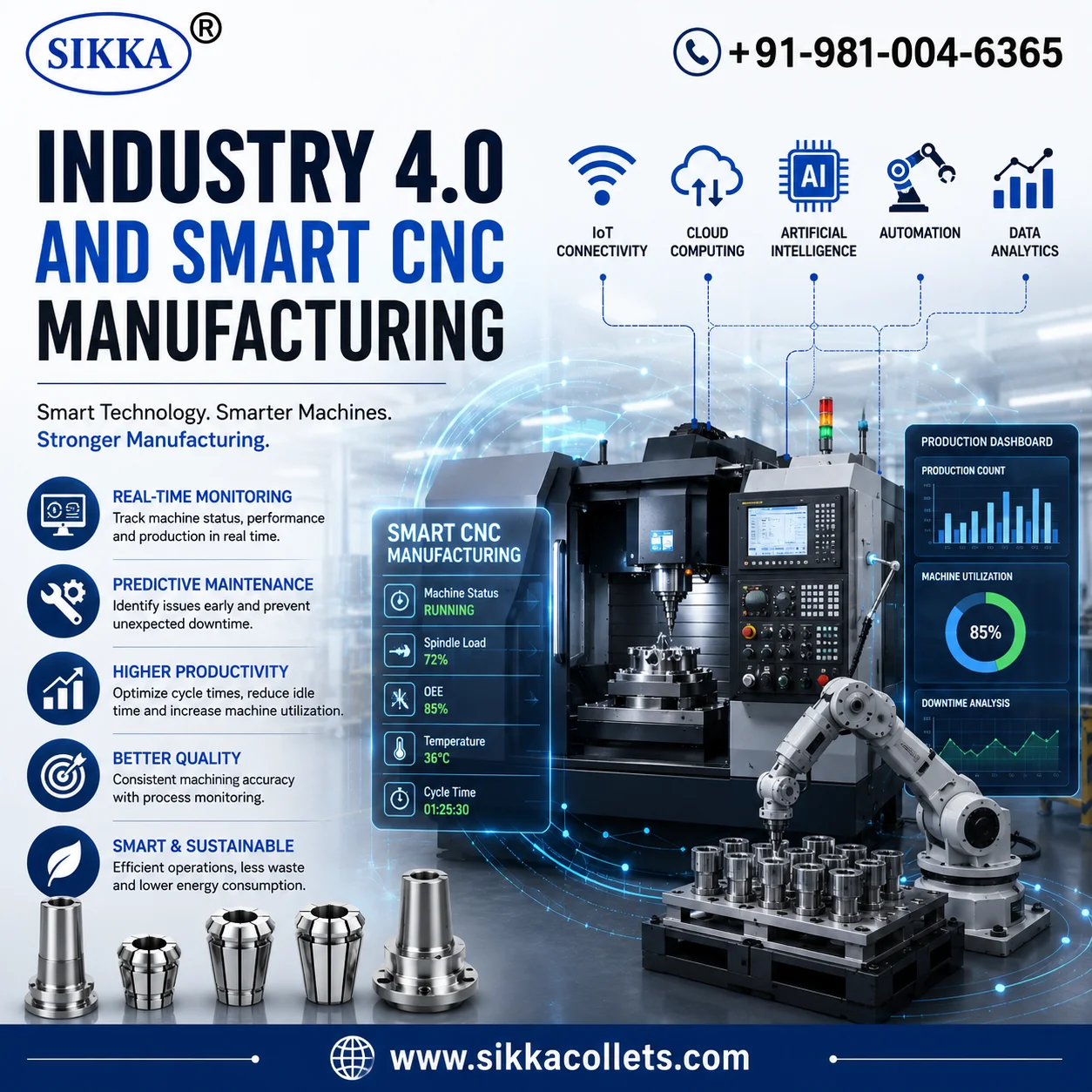
Smart CNC manufacturing is the integration of CNC machines with digital technologies such as IoT sensors, automation systems, production software, and cloud-based monitoring. Instead of relying only on manual inspections, manufacturers can collect machine data continuously and respond to issues before they affect production.
A smart manufacturing setup allows machines to communicate with production systems. Operators receive useful information about spindle load, tool condition, machine utilization, and production progress without waiting for manual reports.
This connected approach improves visibility across the entire shop floor. It also supports better planning and more consistent machining results.
How Industry 4.0 Changes CNC Manufacturing?
Traditional CNC machining depends heavily on operator experience and scheduled maintenance. While this approach still works, it often leaves little room to identify small issues before they become expensive problems.
Industry 4.0 introduces continuous monitoring. Every production cycle generates valuable data. This data helps manufacturers understand how machines perform under different workloads.
Instead of reacting after a machine stops, production teams can identify unusual patterns early. This allows maintenance teams to schedule inspections before failures interrupt production.
Core Technologies Behind Smart CNC Manufacturing
IoT Sensors
IoT sensors collect information directly from CNC machines. They monitor spindle vibration, machine temperature, coolant condition, air pressure, spindle load, and machine operating hours.
This information gives operators a live view of machine performance. Small changes often become visible before they develop into larger mechanical issues.
Cloud Connectivity
Cloud platforms make production data available from multiple machines in one location. Production managers can review machine status, completed jobs, and maintenance records without checking every machine individually.
This also simplifies reporting across multiple manufacturing facilities.
Artificial Intelligence
Artificial intelligence helps analyze production data faster than manual methods. AI can identify machining trends, detect abnormal operating conditions, and support better maintenance planning.
It can also recommend process improvements based on historical production data.
Automation Systems
Automation reduces repetitive manual work. Robotic loading systems, automatic pallet changers, and automatic tool changers help keep machines running with minimal interruption.
These systems improve machine utilization during long production runs.
Traditional CNC vs Smart CNC Manufacturing
| Traditional CNC | Smart CNC Manufacturing |
|---|---|
| Manual machine monitoring | Real-time machine monitoring |
| Reactive maintenance | Predictive maintenance planning |
| Limited production visibility | Centralized production dashboard |
| Manual production reports | Automatic data collection |
| Separate machine operation | Connected manufacturing environment |
Real-Time Machine Monitoring
Real-time monitoring is one of the most practical benefits of smart CNC manufacturing. Every machine continuously shares operating information with the production system.
Operators can monitor:
- Machine status
- Cycle completion
- Spindle load
- Tool usage
- Machine alarms
- Idle time
- Production progress
This visibility helps production teams react quickly when machining conditions change.
Predictive Maintenance Improves Machine Availability
Unexpected machine failures often delay production schedules. Predictive maintenance reduces this risk by using machine data instead of fixed maintenance intervals.
For example, increasing spindle vibration or unusual temperature patterns may indicate bearing wear. Maintenance teams can inspect the machine before the condition becomes serious.
This approach helps reduce unnecessary maintenance while improving machine availability.
Digital technology improves monitoring, but machining accuracy still depends on mechanical stability. Tool holding remains one of the most important factors in precision machining.
A poor-quality collet or worn tool holder can introduce runout, vibration, and inconsistent cutting performance. These problems reduce the value of even the most advanced monitoring system.
Choosing reliable CNC tool holding systems helps maintain stable machining conditions and supports accurate production data. :contentReference[oaicite:0]{index=0}
Similarly, selecting the correct ER collet for your CNC machine improves gripping consistency and reduces unnecessary tool movement during machining.
Building a Connected Manufacturing Workflow
A smart CNC environment is not created by adding one new machine. It develops when machines, software, automation systems, and production teams share information effectively.
A typical workflow starts with CAD and CAM software. The machining program moves to the CNC machine. During machining, sensors collect production data. That information reaches a monitoring platform where operators review machine performance and maintenance requirements.
This continuous flow of information helps manufacturers improve production efficiency without compromising machining quality.
Common Challenges During Industry 4.0 Adoption
Moving to smart CNC manufacturing requires careful planning. Many companies already own reliable CNC machines, but connecting them with digital systems can take time. Success depends on choosing technologies that match production goals instead of adopting every available solution.
Legacy Machine Integration
Older CNC machines may not support modern communication protocols. In such cases, manufacturers often add external sensors or machine monitoring devices instead of replacing the entire machine.
This approach allows gradual digital transformation while controlling investment costs.
Data Management
Connected machines generate large amounts of production data every day. Without proper filtering, important information can become difficult to identify.
Manufacturers should focus on meaningful performance indicators such as machine utilization, cycle time, tool condition, and downtime.
Operator Training
Technology alone does not improve productivity. Machine operators, maintenance engineers, and production planners should understand how to interpret machine data and respond to alerts.
Proper training helps organizations make better use of smart manufacturing systems.
Applications Across Different Industries
Smart CNC manufacturing supports both high-volume production and precision machining. Different industries use connected machining systems to improve consistency and production planning.
- Aerospace components with tight dimensional tolerances.
- Automotive parts requiring repeatable machining cycles.
- Medical components with strict quality requirements.
- Oil and gas components produced under demanding machining conditions.
- Industrial tooling and precision engineering applications.
Although production requirements differ, every industry benefits from better machine visibility and improved process control.
The Role of Precision Collets in Smart Manufacturing
Digital monitoring cannot compensate for poor workholding. A stable machining process starts with accurate tool holding and reliable clamping.
High-quality collets reduce runout and improve gripping consistency. They also help maintain repeatable machining results during long production cycles.
Understanding the impact of collet selection on surface finish and machining tolerance helps manufacturers improve both quality and process stability.
Regular inspection is equally important. Learning how to test collet quality before use can help identify wear before it affects machining accuracy.
Steps to Build a Smart CNC Manufacturing Environment
- Evaluate existing CNC machines and production requirements.
- Install sensors to monitor machine health and operating conditions.
- Connect machines to a centralized monitoring platform.
- Track important production and maintenance data.
- Automate repetitive material handling where practical.
- Review production data regularly and optimize machining processes.
- Train operators to use digital dashboards effectively.
This phased approach allows manufacturers to improve operations without disrupting existing production.
Future Trends in Smart CNC Manufacturing
Smart manufacturing continues to evolve as software and machine technologies become more advanced. Future developments are expected to focus on faster decision-making and improved production flexibility.
- AI-assisted machining optimization.
- Digital twin simulations for production planning.
- Machine vision for automated inspection.
- Collaborative robots working alongside operators.
- Edge computing for faster machine data processing.
- Greater integration between ERP, MES, and CNC systems.
These technologies aim to improve process control while reducing manual intervention.
Frequently Asked Questions
What is Smart CNC Manufacturing?
Smart CNC manufacturing combines CNC machining with connected technologies such as IoT, automation, cloud platforms, and production analytics. The goal is to improve efficiency, machine visibility, and process control.
How does Industry 4.0 improve CNC machining?
Industry 4.0 enables real-time monitoring, predictive maintenance, connected production systems, and better decision-making based on machine data.
Can existing CNC machines become part of a smart factory?
Many existing CNC machines can be upgraded with sensors, communication devices, and monitoring software. The level of integration depends on machine capability and production requirements.
Why is predictive maintenance important?
Predictive maintenance helps identify developing machine issues before they lead to unexpected downtime. This supports more reliable production planning.
Why are precision collets important in smart manufacturing?
Precision collets provide stable tool holding, consistent clamping force, and improved machining accuracy. These mechanical factors support reliable production data and repeatable machining performance.
Final Thoughts
Industry 4.0 is changing how CNC manufacturing operates. Connected machines, automation, and production analytics give manufacturers greater control over machining performance and maintenance planning.
However, digital technologies work best when they are supported by reliable machining fundamentals. Stable tool holding, quality workholding components, and consistent maintenance remain essential for achieving accurate machining results.
Manufacturers that combine modern digital systems with proven machining practices are better positioned to improve productivity, maintain consistent quality, and adapt to changing production demands.