
Precision manufacturing depends on accuracy, consistency, and process control. Even a small variation in machine performance can affect part quality, increase scrap, or reduce tool life.
Digital twin technology helps manufacturers understand these changes before they become costly problems. It creates a virtual representation of a physical machine, production process, or manufacturing system using real operating data.
This allows engineers to observe machine behaviour, evaluate performance, and improve production decisions without interrupting ongoing operations.
In modern CNC environments, a digital twin is more than a visual model. It combines sensor data, machine parameters, and production information to reflect the current condition of the equipment.
Manufacturers can use this digital model to test machining strategies, monitor equipment health, predict maintenance needs, and improve process stability. As smart factories continue to adopt Industry 4.0 practices, digital twins are becoming an important part of precision manufacturing workflows.
The concept is widely associated with real-time monitoring, simulation, and process optimisation in modern manufacturing environments.
What Is a Digital Twin in Precision Manufacturing?
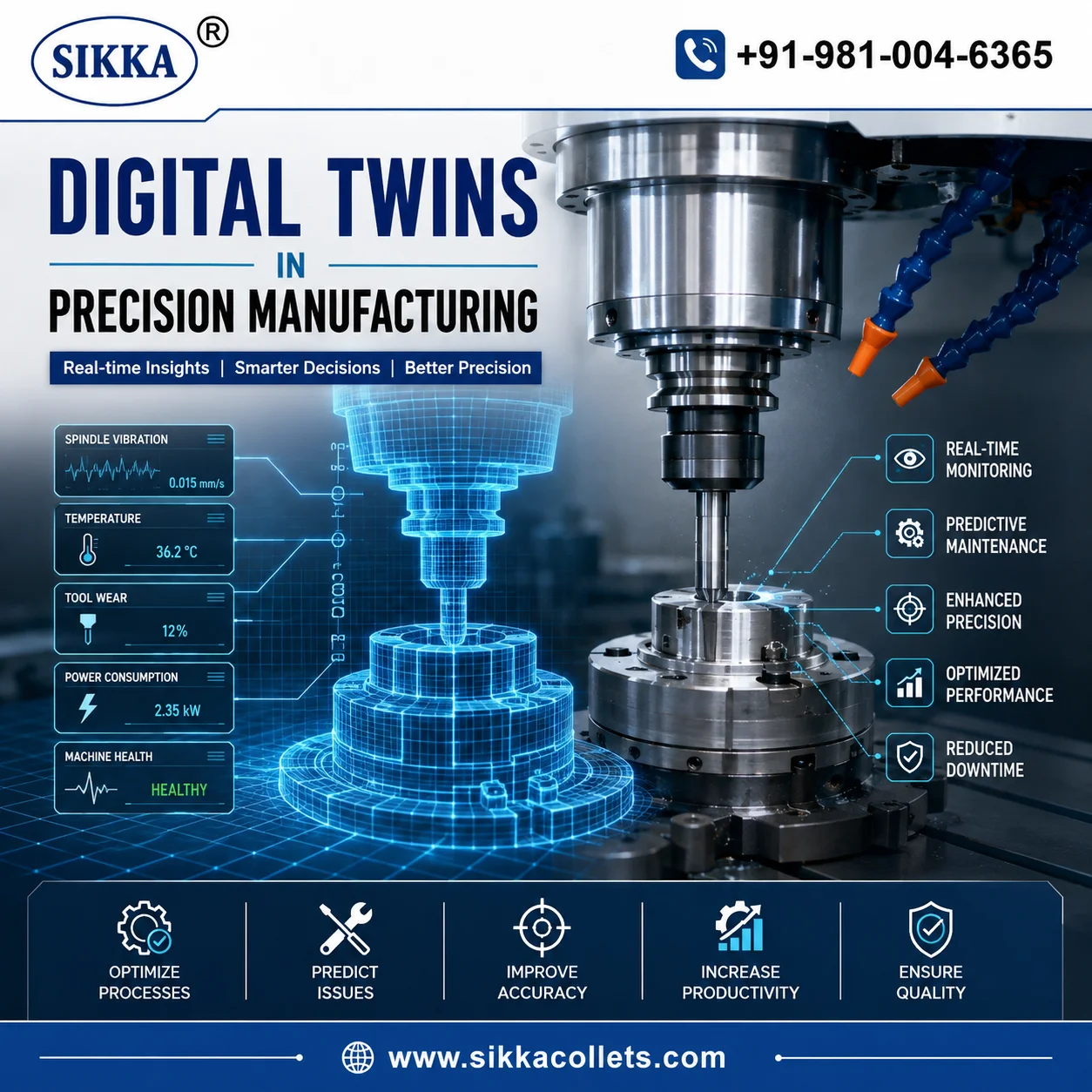
A digital twin is a dynamic digital representation of a physical manufacturing asset. It continuously receives data from machines, sensors, and control systems. Unlike a static 3D model, it updates as operating conditions change. This gives engineers a live view of how machines perform during production.
In precision manufacturing, a digital twin can represent a single CNC machine, an entire machining cell, or even a complete production line. The virtual model mirrors machine behaviour by using information such as spindle speed, feed rate, vibration, temperature, power consumption, and cycle time. This enables manufacturers to identify process variations early and make informed decisions before product quality is affected.
Digital twins also support process validation before production begins. Engineers can analyse machining strategies, review operating conditions, and evaluate potential risks without running repeated physical trials. This reduces unnecessary machine downtime and helps improve production planning.
Why Digital Twins Matter in Precision Manufacturing
Precision machining requires repeatable accuracy across every production cycle. Tool wear, thermal expansion, spindle vibration, and machine alignment can all influence machining results. Digital twins help manufacturers monitor these factors continuously instead of relying only on periodic inspections.
For example, if spindle vibration gradually increases, the digital twin can highlight the trend before it starts affecting dimensional accuracy. Maintenance teams can investigate the issue early instead of waiting for unexpected machine failure. This proactive approach supports better machine availability and more stable production.
Digital twins are equally valuable during new product development. Engineers can evaluate machining parameters, optimise toolpaths, and verify production sequences in a virtual environment. This shortens setup time and reduces the need for repeated machine adjustments during production.
Tool holding also plays an important role in machining consistency. Reliable CNC tool holding systems improve stability during high-speed operations. When combined with digital twin technology, manufacturers gain better visibility into machining performance and equipment behaviour.
Core Components of a Digital Twin
A digital twin depends on accurate data collection and continuous communication between physical equipment and digital software. Several technologies work together to build an effective digital manufacturing model.
Physical Manufacturing Equipment
The physical machine is the foundation of every digital twin. This may include CNC machining centres, turning machines, grinding machines, robotic systems, inspection equipment, or automated production cells.
Industrial Sensors
Sensors collect operating information throughout the production process. They measure parameters such as vibration, spindle load, temperature, pressure, power consumption, and machine position. This real-time data keeps the digital twin updated throughout production.
Data Collection Systems
Machine controllers, PLCs, Industrial IoT devices, and manufacturing software collect sensor information and transfer it to the digital platform. Reliable data collection ensures the virtual model accurately reflects machine performance.
Simulation and Analytics Software
Software processes incoming data and transforms it into meaningful information. Engineers can visualise production conditions, analyse machine behaviour, compare operating scenarios, and identify process improvements without interrupting manufacturing operations.
Decision Support Dashboard
Modern dashboards display machine status, production trends, equipment utilisation, and maintenance indicators in one place. Operators can monitor performance quickly and respond to changing production conditions with greater confidence.
How Digital Twins Work in CNC Manufacturing
Digital twins continuously exchange information between physical machines and their virtual counterparts. Every machining cycle generates operational data that updates the digital model. This creates an accurate picture of machine performance throughout production.
A typical workflow begins with CAD and CAM data used to prepare machining operations. During production, sensors monitor machine conditions and send information to the digital twin platform. The software compares actual machine behaviour with expected operating conditions and highlights any unusual changes.
If vibration levels increase, spindle temperature rises, or machining loads become inconsistent, engineers can investigate the cause before quality issues appear. Early detection helps reduce unexpected downtime and improves production stability.
The quality of workholding directly influences machining performance. Stable collet chucks and properly selected ER collets support consistent tool positioning, making the data generated by digital twins more reliable for process optimisation.
Instead of reacting after production problems occur, manufacturers can use digital twins to improve process control throughout the machining cycle. This supports higher precision, better equipment utilisation, and more consistent manufacturing results.
Digital Twins vs Traditional Manufacturing Simulation
Many people use the terms digital twin and simulation interchangeably. They are not the same. Both help engineers evaluate manufacturing processes, but their capabilities are different.
A traditional simulation is usually performed before production begins. It verifies toolpaths, detects collisions, and checks machining sequences. Once the simulation is complete, it does not receive live updates from the shop floor.
A digital twin continues working throughout the production cycle. It receives real-time information from machines and updates its virtual model continuously. This allows manufacturers to monitor changing machine conditions instead of relying only on initial process planning.
For precision manufacturing, this difference is important. Machine behaviour changes over time due to tool wear, spindle load, thermal growth, and production conditions. A digital twin reflects these changes and supports faster decision-making.
Digital Twin
- Works with live production data.
- Updates continuously during machining.
- Supports predictive maintenance.
- Monitors equipment performance.
- Helps optimise production over time.
Traditional Simulation
- Works with planned machining data.
- Usually performed before production.
- Does not monitor machine health.
- Cannot detect real operating changes.
- Mainly validates machining programs.
Applications of Digital Twins in Precision Manufacturing
Digital twins support many manufacturing activities beyond machine monitoring. They help engineers improve productivity, reduce process variation, and maintain consistent product quality across different production batches.
Process Optimisation
Every machining operation contains variables such as spindle speed, feed rate, coolant flow, cutting depth, and tool engagement. Small adjustments can improve productivity or reduce unnecessary tool wear.
Digital twins allow engineers to evaluate these parameters using real production data. Instead of relying on trial-and-error adjustments, manufacturers can identify process improvements based on actual machine performance.
Production Planning
Manufacturers often need to introduce new components while maintaining existing production schedules. A digital twin helps engineers validate machining sequences before the first component reaches the machine.
This reduces setup errors and shortens machine preparation time. Production teams can identify potential bottlenecks before they affect delivery schedules.
Machine Performance Monitoring
Equipment performance changes gradually during regular production. Bearings wear, spindle temperatures rise, and vibration levels increase over time. These changes may not be visible during routine inspections.
Digital twins continuously monitor machine behaviour and present performance trends through visual dashboards. Maintenance teams can investigate unusual patterns before they develop into serious mechanical problems.
Energy Efficiency
Energy consumption has become an important manufacturing consideration. Digital twins help identify machining operations that consume excessive power. Engineers can compare different machining strategies and improve energy efficiency without affecting product quality.
Digital Twins for CNC Tool Holding Systems
Precision machining depends on stable tool holding. Even the most advanced CNC machine cannot achieve consistent results if the cutting tool is not held securely. Digital twins help manufacturers understand how tool holding systems perform during production.
The virtual model can monitor machine conditions that influence tool stability. These include spindle vibration, cutting loads, operating temperature, and machining forces. By analysing these values together, engineers gain better visibility into machining performance.
Selecting the correct ER collet and maintaining proper clamping conditions remain essential for consistent machining accuracy. Digital twin technology complements these practices by providing continuous operational feedback instead of depending only on manual inspections.
Similarly, manufacturers using advanced collet chucks can evaluate how tooling performs under different machining conditions. This helps identify opportunities to improve process stability and reduce unnecessary production interruptions.
Improving Quality Control with Digital Twins
Quality inspection traditionally occurs after machining is complete. By that stage, defective parts may already have consumed machine time, tooling, and raw material.
Digital twins encourage a more proactive approach. Continuous machine monitoring allows engineers to identify process variations before they affect finished components.
For example, increasing spindle vibration or unexpected cutting loads may indicate a developing machining issue. Operators can investigate the cause early instead of waiting until dimensional inspection reveals rejected parts.
Digital twins also help manufacturers compare machining performance across different production batches. This improves process consistency and supports better long-term quality control throughout precision manufacturing operations.
Predictive Maintenance with Digital Twins
Unexpected machine failures can disrupt production schedules and increase operating costs. Digital twins help manufacturers detect early signs of equipment problems by analysing machine data throughout the production cycle.
Instead of waiting for a spindle, bearing, or drive component to fail, engineers can monitor changes in vibration, temperature, power consumption, and operating loads. Small changes often appear before a major breakdown occurs. Early identification allows maintenance teams to plan service during scheduled downtime.
This approach reduces emergency repairs and helps maintain consistent production quality. It also improves equipment availability by preventing avoidable machine stoppages.
Tool holding components also require regular inspection. Following proper collet handling, cleaning, and replacement practices helps maintain gripping accuracy and supports reliable machining performance alongside digital monitoring systems.
Benefits of Digital Twins for Precision Manufacturing
Digital twins provide practical advantages across machining, production planning, maintenance, and quality control. Their value increases as manufacturing systems become more connected.
- Improves machine visibility through continuous monitoring.
- Reduces unplanned machine downtime.
- Supports predictive maintenance decisions.
- Helps optimise machining parameters.
- Improves production planning before machining begins.
- Reduces setup errors and repeated adjustments.
- Supports better process consistency across production batches.
- Improves communication between production and maintenance teams.
- Provides better insight into long-term equipment performance.
Challenges of Implementing Digital Twins
Although digital twins offer significant advantages, successful implementation requires careful planning. Manufacturers need reliable machine data, compatible software platforms, and accurate sensor integration.
Older CNC machines may require additional hardware before they can provide the data needed for digital twin applications. Integrating machines from different manufacturers can also require additional engineering effort.
Another important consideration is data quality. A digital twin can only produce useful insights if the information collected from the shop floor is accurate and consistent. Poor sensor calibration or incomplete machine data reduces the effectiveness of the virtual model.
Manufacturers should also ensure that operators, production engineers, and maintenance teams understand how to interpret the information provided by the digital twin. Training helps organisations gain maximum value from the technology.
The Future of Digital Twins in Precision Manufacturing
Digital twin technology continues to evolve alongside Industry 4.0, Industrial IoT, and artificial intelligence. Future manufacturing systems will rely even more on connected machines that exchange information automatically.
Artificial intelligence will help digital twins identify complex production patterns and recommend process improvements with greater accuracy. Edge computing will allow more data processing to occur directly on the shop floor, reducing response times for critical manufacturing decisions.
Manufacturers are also integrating digital twins with automated production cells, robotic systems, and smart inspection equipment. This creates a more connected manufacturing environment where decisions are supported by live operational data instead of historical reports alone.
Reliable workholding will remain essential as machining technology advances. Choosing high-quality high-performance collets for precision machining helps maintain stable machining conditions, allowing digital monitoring systems to deliver more meaningful operational insights.
Frequently Asked Questions
What is a digital twin in precision manufacturing?
A digital twin is a real-time virtual representation of a physical machine, production process, or manufacturing system. It continuously updates using operational data collected from equipment on the shop floor.
How do digital twins improve CNC machining?
They help monitor machine performance, detect abnormal operating conditions, support predictive maintenance, and improve process optimisation using live production data.
Can digital twins reduce machine downtime?
Yes. By identifying early signs of equipment wear or performance changes, maintenance teams can schedule repairs before unexpected failures interrupt production.
Do digital twins replace CNC simulation software?
No. CNC simulation verifies machining programs before production begins. Digital twins continue monitoring equipment during actual production using real operating data.
Why are digital twins important for precision manufacturing?
Precision manufacturing depends on consistent machine performance and tight process control. Digital twins provide continuous visibility into machine behaviour, helping manufacturers maintain quality, improve efficiency, and make better operational decisions.