
Checking collet compatibility before ordering helps prevent fitting problems, poor tool gripping, and unnecessary replacement costs. The correct collet must match the tool shank, holder, spindle system, and required clamping range. Similar sizes do not always mean compatible designs.
Before placing an order, check your machine specifications, identify the existing collet series, and verify the part number. These steps help you select a collet that fits your equipment and meets your machining requirements.
Why Is Collet Compatibility Important?
A collet holds a cutting tool or workpiece in position during machining. It must provide the correct fit and clamping action for the intended application. An incompatible collet may not seat correctly in the holder. It can also cause uneven gripping, excessive runout, vibration, or tool slippage.
These problems can affect machining accuracy and surface finish. They may also increase tool wear and production downtime. Checking compatibility before ordering helps reduce these risks and makes replacement decisions easier.
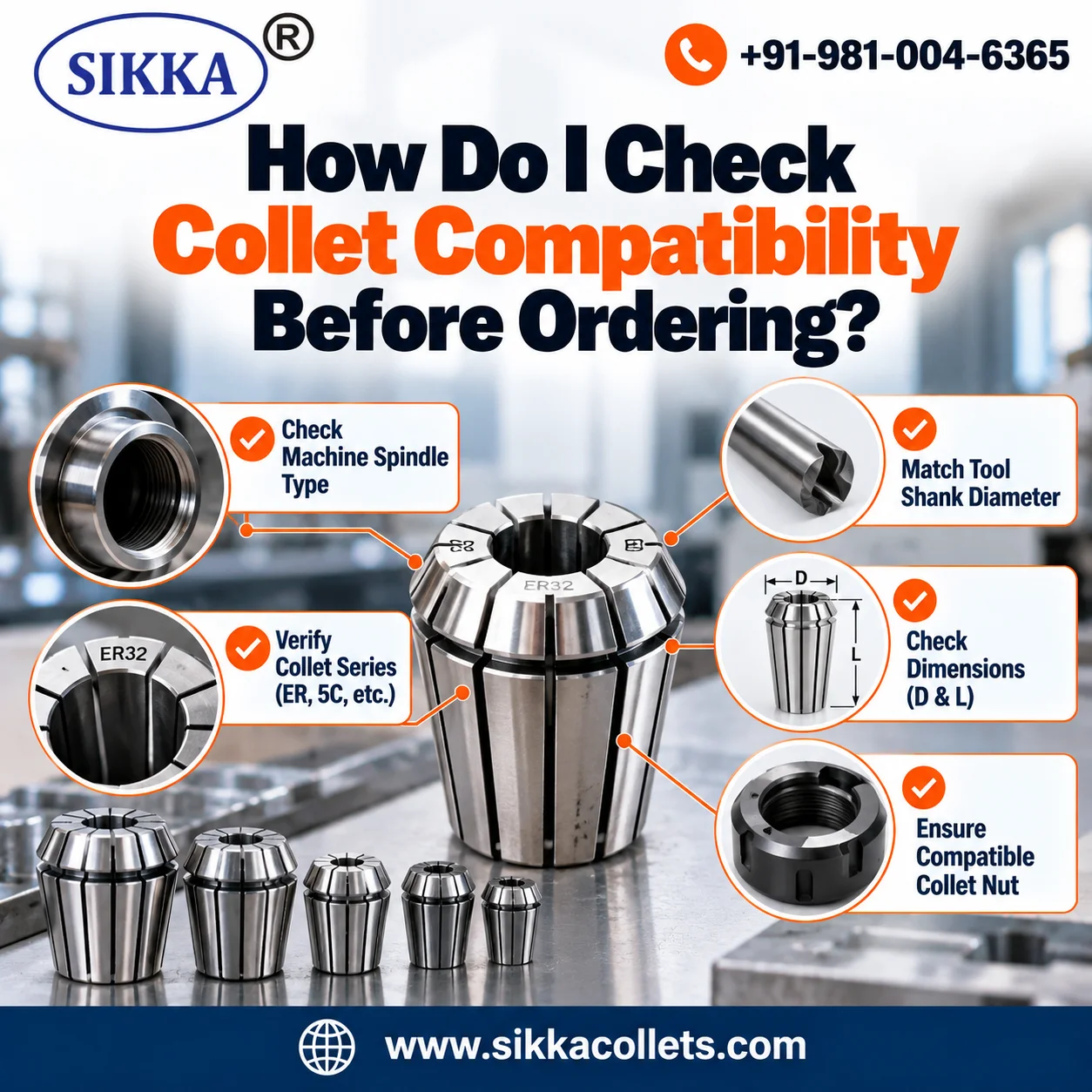
How to Check Collet Compatibility Before Ordering?
1. Identify Your Machine and Collet Holder
Start by identifying the machine, spindle, and holder used in your setup. Record the machine make and model. Then check the holder markings, technical drawings, or equipment manual.
Do not rely on the machine brand alone. Different machines can use different spindle interfaces and tooling systems. The existing holder provides important information about the collet you need.
If you use a dedicated collet holder, confirm its exact type and specifications. Check the holder interface before comparing individual collet sizes.
2. Confirm the Collet Series
Collets are available in different series and designs. ER11, ER16, ER20, ER25, ER32, and ER40 are common examples. Each series has specific dimensions and a compatible holder design.
A collet from one ER series should not be treated as interchangeable with another. Even when both collets have the same bore diameter, their outside dimensions and seating geometry may differ.
Identify the series from the manufacturer’s markings or technical documentation. If the marking is missing, compare the collet dimensions with an official drawing. This is more reliable than judging compatibility by appearance.
3. Measure the Tool Shank Diameter
The tool shank diameter is another important part of collet compatibility. The cutting diameter and shank diameter may be different. Always check the cylindrical section that the collet will grip.
Use the tool manufacturer’s specifications or a suitable measuring instrument to verify the shank diameter. Keep the measurement in the correct unit. Metric and imperial sizes can look similar but are not necessarily interchangeable.
For example, a 6 mm shank is not the same as a 1/4-inch shank. One measures 6 mm, while the other measures 6.35 mm. Do not assume that a nearby nominal size will provide a safe and accurate fit.
4. Check the Permitted Clamping Range
Every collet has a specified bore size and permitted clamping range. Check the manufacturer’s documentation to confirm that your tool shank falls within that range.
Do not force a larger shank into a smaller collet. Avoid using a collet beyond its specified compression range. Incorrect clamping can damage the collet or reduce its grip on the tool.
The required fit also depends on the collet design. Some systems support a defined range of shank diameters, while others have more specific sizing requirements. Always follow the product specifications.
5. Verify the Chuck, Nut, and Seating Geometry
The collet must match its holder or chuck. Its seating surface, dimensions, and retention arrangement must work with the intended assembly. The collet nut must also be compatible with the system.
For example, an ER collet requires the correct ER holder and compatible nut arrangement. A nut that looks similar may have different thread or engagement specifications. Never assume that similar external dimensions guarantee a proper fit.
Check the assembly instructions before installation. Follow the manufacturer’s method for engaging the collet with the nut. Incorrect assembly can affect clamping performance and damage the tooling components.
6. Verify the Part Number and Technical Drawing
Before placing an order, compare the existing collet’s part number with the replacement specification. Review its series, bore diameter, overall dimensions, and intended application.
If the part number is unavailable, use a technical drawing to compare the relevant dimensions. Ask the supplier to confirm the replacement specification when important details remain unclear.
Photos can help identify a product, but they cannot confirm every critical dimension. Use written specifications to make the final decision.
Common Collet Compatibility Mistakes to Avoid
Several ordering mistakes can lead to an incorrect collet selection. Watch out for these issues:
- Matching only the bore diameter: The holder interface and collet series must also match.
- Confusing cutting and shank diameters: Measure the section that the collet actually grips.
- Mixing metric and imperial sizes: Verify the exact measurement before ordering.
- Ignoring the collet nut: Confirm that the nut and collet work with the intended holder.
- Using appearance as proof: Similar-looking collets may have different dimensions.
- Ignoring component condition: Wear, contamination, and damage can affect gripping and runout.
For additional guidance, review the specifications of the relevant ER collets before selecting a replacement. Compare the product details with your existing tooling rather than relying on the series name alone.
How to Confirm Collet Compatibility with Your Supplier?
When the available information is incomplete, contact your collet supplier before purchasing. Provide enough technical detail to identify the required product accurately.
Share the following information:
- Machine make and model.
- Spindle, chuck, or holder type.
- Existing collet series and part number, if available.
- Required tool shank diameter and measurement unit.
- Technical drawing or clear photos of the existing component.
- Application requirements and required quantity.
Ask the supplier to confirm the collet series, dimensions, clamping range, and holder compatibility. Request clarification if any specification does not match your existing setup. This process helps you make an informed purchasing decision.
Check Collet Condition and Precision Requirements
Correct dimensions are essential, but they are not the only factors that affect machining performance. A compatible collet must also be in suitable condition for the application.
Inspect the collet for cracks, damaged slots, contamination, and visible wear. Clean the collet, holder, and mating surfaces according to the manufacturer’s instructions. Dirt or chips between contact surfaces can affect seating and runout.
Runout can also depend on the holder, tool shank, assembly method, and tool projection. If precision is important, check the complete setup against the machine and tooling manufacturer’s requirements. A collet that fits physically may not meet every accuracy requirement.
Collet Compatibility Checklist Before Ordering
Use this checklist before confirming your purchase:
- Machine and holder specifications are verified.
- Collet series matches the intended holder.
- Tool shank diameter is measured or confirmed.
- Metric or imperial sizing is identified correctly.
- Clamping range matches the tool shank.
- Collet nut and seating arrangement are compatible.
- Part number or technical drawing has been checked.
- Supplier confirmation has been obtained when needed.
For systems that use dedicated chuck assemblies, also review the specifications of the relevant collet chucks. Confirm that all components work together before ordering a replacement.
Frequently Asked Questions
How do I know which collet fits my machine?
Check your machine manual, spindle interface, holder markings, and existing collet part number. Then verify the series, dimensions, and permitted clamping range against the manufacturer’s specifications.
Can I use the same collet size in different ER series?
Not automatically. Different ER series have different external dimensions and holder interfaces. Confirm that the collet series matches the intended holder, even when the bore diameter is identical.
Are 6 mm and 1/4-inch collets interchangeable?
No, they are different nominal sizes. A 1/4-inch shank measures 6.35 mm, while a 6 mm shank measures 6 mm. Check the collet’s specified clamping range before selecting either size.
Can an incompatible collet cause runout?
Yes, an incorrect fit or poor seating can contribute to runout. However, runout can also result from a damaged collet, a dirty holder, a bent tool, or incorrect assembly. Inspect the complete setup.
What should I do if I cannot identify my collet?
Record its dimensions and photograph the markings, holder, and nut. Share this information with your supplier. Ask for confirmation against a technical drawing before placing the order.
Final Checks Before Placing Your Order
Checking collet compatibility requires more than matching a single diameter. Confirm the machine interface, collet series, tool shank size, clamping range, and nut arrangement. Review the part number and technical drawing whenever possible.
These checks help you choose a suitable replacement and avoid preventable ordering mistakes. When specifications are unclear, obtain confirmation from the manufacturer or supplier before installing the collet.