
High tooling costs can affect production budgets, machining efficiency, and part quality. Cutting tools need regular replacement. Poor tool holding can also cause runout, vibration, scrap, and unplanned machine stops. These problems increase the cost of producing each part.
Better collets can help control these costs when the existing setup has toolholding problems. A precision collet with the correct fit can improve tool grip and concentricity. This may support longer tool life and more consistent machining. However, results depend on the collet, toolholder, spindle condition, cutting parameters, and application.
How Collet Quality Affects CNC Tooling Costs?
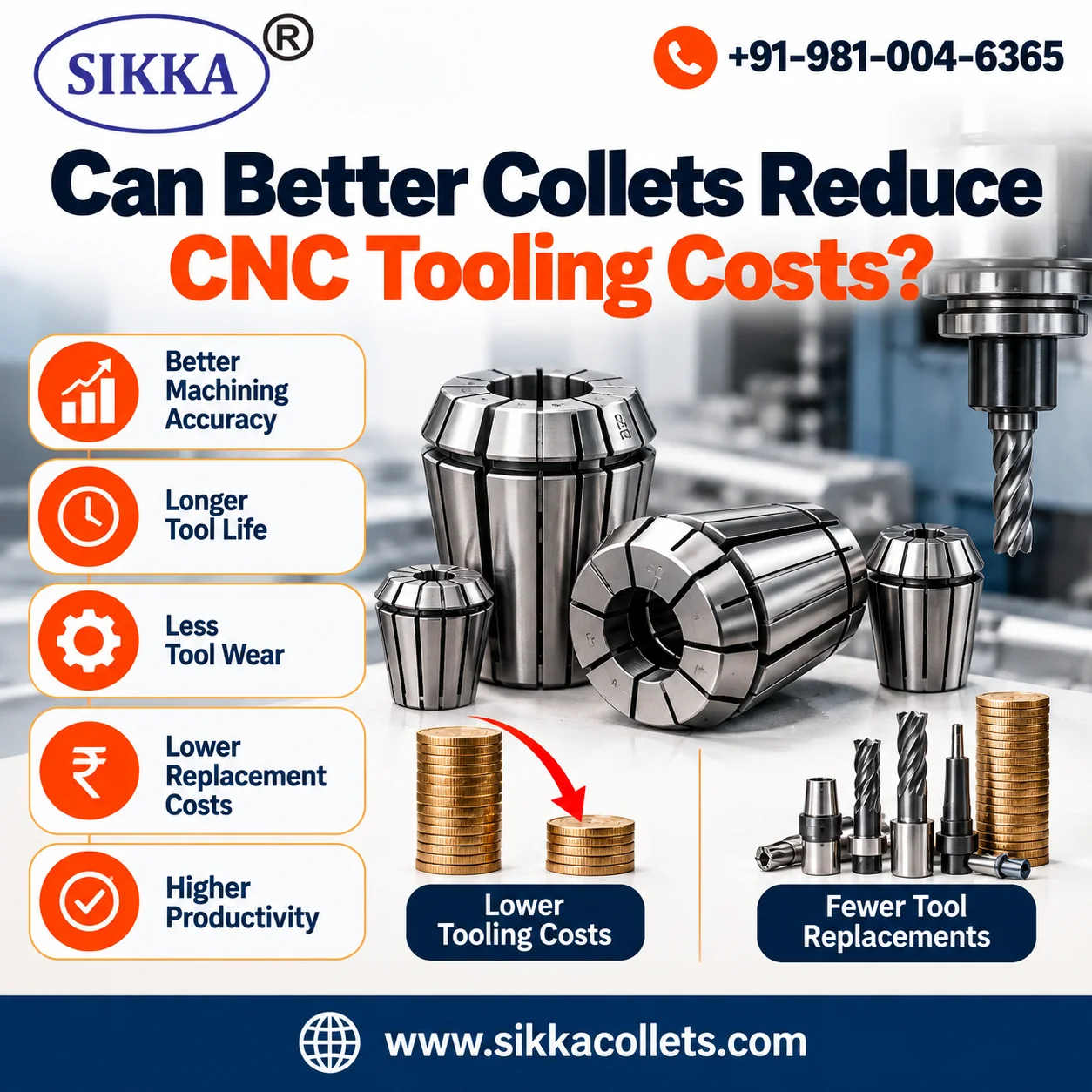
A collet holds the cutting tool inside a compatible toolholder. It applies clamping pressure around the tool shank. The system must hold the tool securely and keep it properly aligned during machining.
A worn, damaged, or unsuitable collet may affect tool stability. Excessive runout can distribute cutting forces unevenly across the cutting edges. This may accelerate wear and reduce machining consistency. Vibration can also affect surface finish and dimensional accuracy.
These issues create costs beyond the price of a replacement collet. Manufacturers may need to replace cutting tools sooner, inspect more parts, repeat machining operations, or stop production to investigate the problem.
The correct CNC collet chuck and compatible collet should therefore be selected as part of the complete toolholding system. A high-quality collet alone cannot correct every spindle, holder, or machining problem.
5 Ways Better Collets Can Help Reduce CNC Tooling Costs
1. Support Longer Cutting Tool Life
Runout can cause individual cutting edges to carry unequal loads. This can increase wear on certain edges and affect cutting performance. A precision collet that maintains suitable concentricity can help distribute cutting forces more evenly.
This may allow cutting tools to deliver more consistent performance before replacement. The benefit depends on the operation, cutting conditions, tool geometry, and existing runout. Measure tool life before and after changing collets to determine the actual improvement.
2. Reduce Tool Breakage and Premature Replacement
Unstable tool holding can contribute to vibration and inconsistent cutting loads. These conditions may increase the risk of tool damage, especially during demanding machining operations.
A suitable collet with adequate gripping force helps maintain tool stability. Correct tool insertion and tightening are also important. Operators should inspect the collet and nut for wear, contamination, and damage before use.
Better tool holding cannot eliminate every tool failure. Incorrect cutting parameters, excessive tool overhang, damaged cutting edges, and poor machine condition can also cause breakage.
3. Minimise Scrap and Rework
Precision machining requires repeatable tool positioning. Excessive runout can affect hole quality, dimensional accuracy, and surface finish. These problems may lead to rejected parts or additional finishing work.
A suitable collet can help maintain consistent tool positioning when the existing toolholding system is the source of the problem. This is particularly relevant to operations with tight tolerances or expensive workpiece materials.
Track rejected parts and rework hours before making a change. These records can show whether improved tool holding produces a measurable reduction in production waste.
4. Improve Production Consistency
Frequent tool changes, repeated adjustments, and inconsistent machining results can interrupt production. A reliable collet system helps operators maintain a repeatable setup when the components are compatible and properly maintained.
Correct collet selection also matters when changing between tools or machining operations. The collet must match the tool shank and the intended holder system. Never force an incorrectly sized collet into a holder.
5. Reduce Unplanned Downtime
Tool breakage, poor surface finish, and inconsistent dimensions can require troubleshooting. Production may stop while operators inspect the spindle, holder, collet, and cutting tool.
Regular inspection and suitable replacement intervals can help prevent avoidable interruptions. Keep collets clean and store them properly. Replace damaged components instead of continuing to use them.
Cheap Collets vs Better-Quality Collets
A lower purchase price does not always mean a lower operating cost. However, a more expensive collet is not automatically the better choice for every application.
| Factor | What to evaluate |
| Purchase price | Initial cost and expected service life |
| Runout | Measured accuracy under suitable test conditions |
| Tool life | Replacement frequency during comparable operations |
| Part quality | Scrap, rework, and dimensional consistency |
| Maintenance | Cleaning, inspection, and replacement needs |
Compare collets under similar machining conditions. Check the manufacturer’s specifications and measure runout with an appropriate setup. This gives your team a more reliable basis for selecting a collet than price alone.
How to Calculate the Cost of Better Collets?
Evaluate the total cost of producing acceptable parts. Include cutting tools, collets, scrap, rework, and downtime where these costs can be measured reliably.
Total cost per good part = Total relevant production costs ÷ Number of good parts produced.
For a fair comparison, record the existing setup’s costs over a representative production period. Then repeat the process after changing the collet, keeping other conditions as consistent as possible.
Include the purchase price of the new collets and any required setup changes. Compare the total cost per good part rather than looking only at cutting tool expenditure. Do not assume savings in advance. Actual results should come from production records.
How to Choose Collets That Fit Your CNC Application?
Start with machine and toolholder compatibility. Check the required collet system, tool shank diameter, clamping range, and manufacturer’s specifications. Consider the machining operation and the level of accuracy it requires.
For example, ER collets are used in compatible toolholding systems across various machining applications. The correct size and specification depend on the holder and cutting tool. Do not select a collet based on its product name alone.
Also consider the supplier’s dimensional specifications, quality controls, and technical support. Consistent manufacturing quality and clear product information can help your team make an informed purchasing decision.
Collet Maintenance Practices That Help Control Costs
- Clean contact surfaces: Remove chips, dust, and residue before installing a collet.
- Inspect for wear: Look for cracks, corrosion, deformation, and damaged slots.
- Follow tightening instructions: Use the manufacturer’s recommended assembly method and torque.
- Check runout: Investigate excessive readings before blaming the collet alone.
- Store collets carefully: Protect precision surfaces from impact, contamination, and moisture.
- Replace damaged parts: Do not rely on a worn collet to maintain accurate clamping.
These practices help identify problems before they affect production. They also make it easier to distinguish collet wear from issues involving the spindle, holder, cutting tool, or machining parameters.
When Is Upgrading to Better Collets Worth It?
An upgrade deserves evaluation when tool runout is excessive, cutting tools wear unevenly, part quality varies, or the current collet no longer meets the application’s requirements. It may also be worthwhile when expensive tools or tight tolerances make consistent tool holding especially important.
First, inspect the complete toolholding system. Check the spindle, holder, nut, collet, and tool shank. Measure runout and review production records. If the collet is contributing to the problem, test a compatible replacement and compare the results.
Better collets can help reduce CNC tooling costs when they address a measurable toolholding issue. The strongest purchasing decision comes from verified specifications, proper maintenance, and a comparison of actual production costs.