
The integration of tool holding systems in robotics is changing how modern machining environments operate. Robots are no longer limited to handling parts. They now interact directly with cutting tools and machining systems. This shift demands high precision, repeatability, and reliable clamping performance.
In automated CNC environments, the connection between a robot and a cutting tool is not direct. It passes through multiple layers. These include the robot wrist, tool changer, and the tool holding system. Each layer must work together without deviation.
The integration of tool holding systems in robotics becomes critical when machining accuracy depends on microns. Even a small misalignment at the holder level can affect surface finish and tool life.
Understanding Tool Holding Systems in Robotic Environments
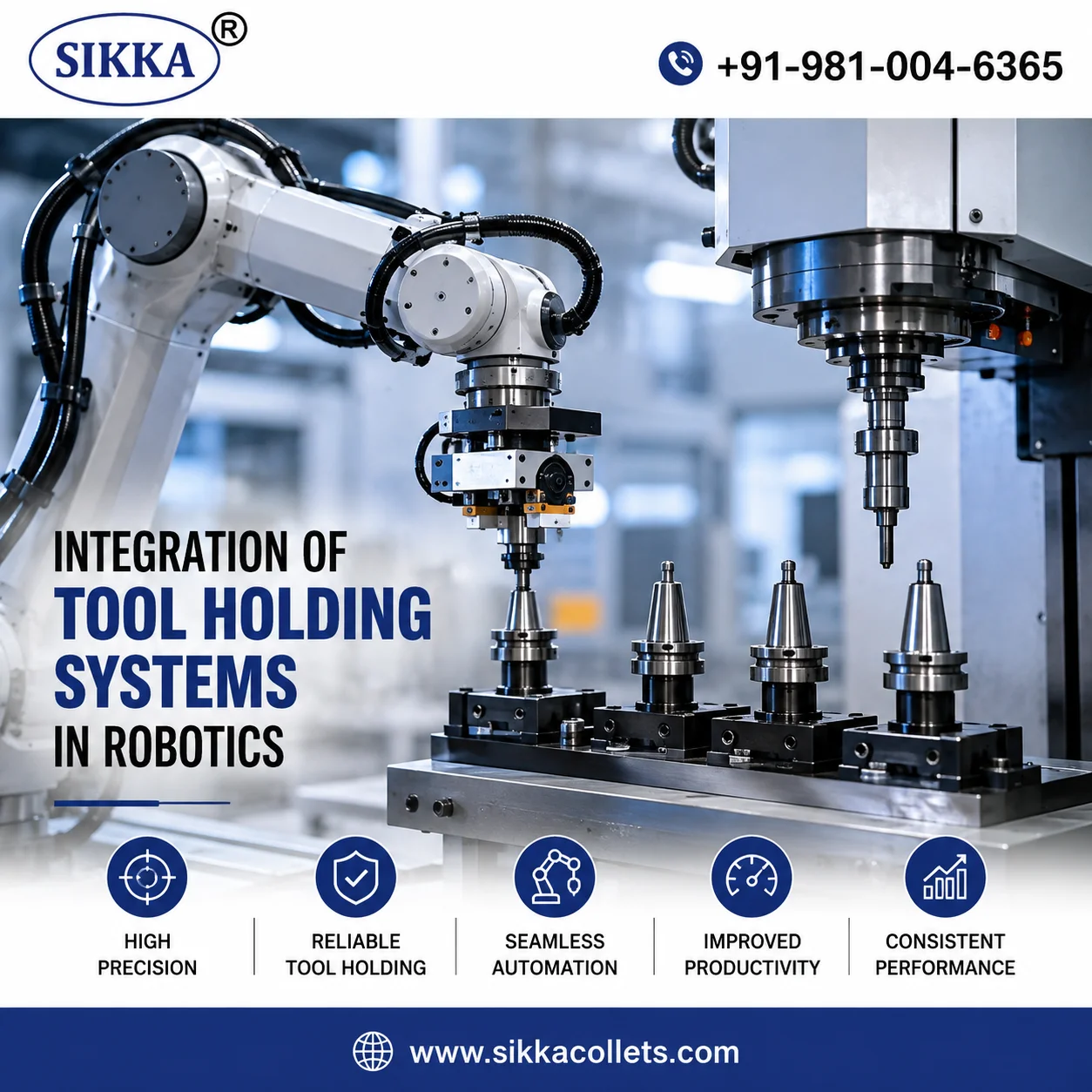
A tool holding system secures the cutting tool inside a spindle or robotic interface. It ensures that the tool remains stable during high-speed operations. In robotic setups, this role becomes more complex because motion is dynamic.
Unlike traditional CNC machines, robotic systems introduce additional movement and flexibility. This makes the integration of tool holding systems in robotics more sensitive to errors.
Common tool holding components include collets, collet chucks, and holders. Each component contributes to gripping force and alignment accuracy. For example, collet chucks provide strong and uniform clamping across the tool surface.
Different applications require different collet types. A detailed comparison of options like ER, DIN, and 5C can be found here: types of collets.
How Integration Works in a Robotic Setup?
The integration of tool holding systems in robotics follows a structured flow. It starts from the robot arm and ends at the cutting interface.
The robot wrist provides orientation. It allows rotation and positioning across multiple axes. This ensures the tool approaches the workpiece at the correct angle.
Next comes the tool changer. This component allows robots to switch between tools automatically. It reduces downtime and increases production flexibility.
The final connection is the tool holding system. This is where precision matters the most. The holder must maintain concentricity while handling cutting forces.
Improper integration at this stage can lead to vibration and tool wear. This is why understanding grip force in collets is essential.
Role of Collets in Robotic Tool Holding
Collets are widely used in robotic machining setups due to their accuracy and flexibility. They provide uniform clamping and reduce runout.
The integration of tool holding systems in robotics often relies on ER collets because of their adaptability. These collets can hold a range of tool sizes with consistent grip.
You can explore how these systems function in detail here: ER collet systems.
Collets also support quick tool changes. This is important in robotic cells where cycle time matters. Consistent clamping ensures that every tool change maintains the same position.
Key Performance Factors in Integration
The integration of tool holding systems in robotics depends on multiple technical factors. Ignoring these can lead to poor machining results.
Runout is one of the most critical parameters. It defines how accurately the tool rotates around its axis. Lower runout leads to better surface finish and longer tool life.
Clamping force is equally important. A weak grip can cause tool slippage during cutting. A strong and uniform grip ensures stability.
Balance also plays a role in high-speed operations. Unbalanced holders can introduce vibration. This affects both the tool and the workpiece.
A deeper understanding of these factors is discussed here: impact on surface finish and tolerance.
Applications of Robotic Tool Holding Integration
The integration of tool holding systems in robotics is widely used across industries. It supports both high-volume and precision-based production.
In CNC machine tending, robots load and unload parts. They also handle tools in advanced setups. This reduces manual intervention.
In aerospace machining, precision is critical. Tool holding systems must maintain tight tolerances across repeated operations. Even small deviations can lead to rejection of components.
Automotive manufacturing also benefits from robotic integration. High-speed production lines require consistent performance. Reliable tool holding systems ensure that machining quality remains stable.
You can explore more industry-specific applications here: applications of collets.
Challenges in Integration
The integration of tool holding systems in robotics is not without challenges. Precision alignment is one of the biggest concerns.
If the tool holder is not aligned correctly, it can cause runout. This affects machining accuracy and tool life.
Another issue is tool slippage. This happens when clamping force is not sufficient. It can damage both the tool and the workpiece.
Maintenance is also important. Wear and tear in collets can reduce performance over time. Regular inspection helps avoid unexpected failures.
Common issues and their solutions are explained here: collet slippage problems.
About the Manufacturer
Sikka Precision Technologies is a professionally operated and owned company producing precision collets. High quality steel is used across its product range to ensure durability and consistent performance.
The company focuses on maintaining accuracy in every component. This supports industries that rely on stable and repeatable machining processes.
More details about manufacturing standards can be explored here: precision manufacturing of collets.
Types of Tool Holding Systems Used in Robotic Integration
The integration of tool holding systems in robotics depends on selecting the right holder for the application. Different systems offer different levels of accuracy, grip, and flexibility.
Collet-based systems are widely used due to their balance between precision and adaptability. They are suitable for applications where tools need to be changed frequently. A detailed comparison between different holding systems is available here: collets vs other tool holders.
Hydraulic chucks provide strong damping and are useful in vibration-sensitive operations. They are often used in finishing processes where surface quality matters.
Shrink fit holders offer high rigidity. They are preferred in high-speed machining where balance and stability are critical. However, they require controlled heating systems, which may limit flexibility in robotic environments.
In many automated setups, collet systems remain the practical choice. They allow quick adjustments and support a wide range of tool sizes.
Benefits of Integration in Automated Machining
The integration of tool holding systems in robotics improves process reliability. It ensures that every tool performs consistently across repeated cycles.
One major benefit is reduced setup time. Robots can handle tool changes without manual intervention. This improves machine utilization.
Another advantage is consistency. Properly integrated tool holders maintain alignment across operations. This reduces variation in finished parts.
Automation also reduces human error. Manual handling often introduces inconsistencies. Robotic systems eliminate this variability.
Productivity improves when tool holding systems are optimized. Stable clamping allows higher cutting speeds without compromising accuracy. You can explore how tool holding affects productivity here: improving CNC productivity.
Design Considerations for Better Integration
Successful integration of tool holding systems in robotics requires careful planning. System compatibility is the first factor to consider.
The interface between the robot and the tool holder must be precise. Any mismatch can affect performance.
Material selection also matters. Tool holders made from high-quality steel provide better durability. They maintain performance under repeated stress.
Another factor is ease of maintenance. Systems that allow quick inspection and replacement reduce downtime. Regular care helps maintain clamping accuracy.
Guidelines for proper selection can be explored here: choosing the right collet.
Future Trends in Robotic Tool Holding Integration
The integration of tool holding systems in robotics is evolving with new technologies. Modern systems are moving toward smarter and more connected solutions.
Sensor-enabled tool holders are becoming more common. They can monitor vibration, temperature, and tool condition in real time. This helps detect issues before they affect production.
Automation is also becoming more flexible. Robots are now capable of handling complex machining tasks. This increases the demand for adaptable tool holding systems.
Digital integration is another trend. Tool data can be connected to central monitoring systems. This supports predictive maintenance and process optimization.
Innovations in design are continuously improving performance. You can explore recent developments here: collet design innovations.
Conclusion
The integration of tool holding systems in robotics plays a critical role in modern machining environments. It connects robotic motion with cutting precision.
Every component in the system must work together. From the robot wrist to the tool holder, each element affects accuracy and stability.
Choosing the right tool holding system improves consistency and reduces errors. It also supports higher productivity in automated setups.
As automation continues to advance, the importance of reliable tool holding will increase. Well-integrated systems will remain essential for maintaining machining quality.