
Modern manufacturing depends on speed, repeatability, and precision. Every machining operation must produce consistent results with minimum downtime. One component that plays a major role in achieving these goals is the collets for automatic lathe machines. A high-quality collet provides secure gripping, excellent concentricity, and reliable performance during continuous production.
Choosing the right collets for automatic lathe machines directly affects machining accuracy, tool life, surface finish, and production efficiency. A poor-quality collet can increase runout, create vibration, damage workpieces, and lead to costly production delays.
This guide explains everything you should know about collets for automatic lathe machines, including their working principle, types, applications, material selection, machine compatibility, and maintenance tips. The information is based on practical manufacturing experience and industry requirements.
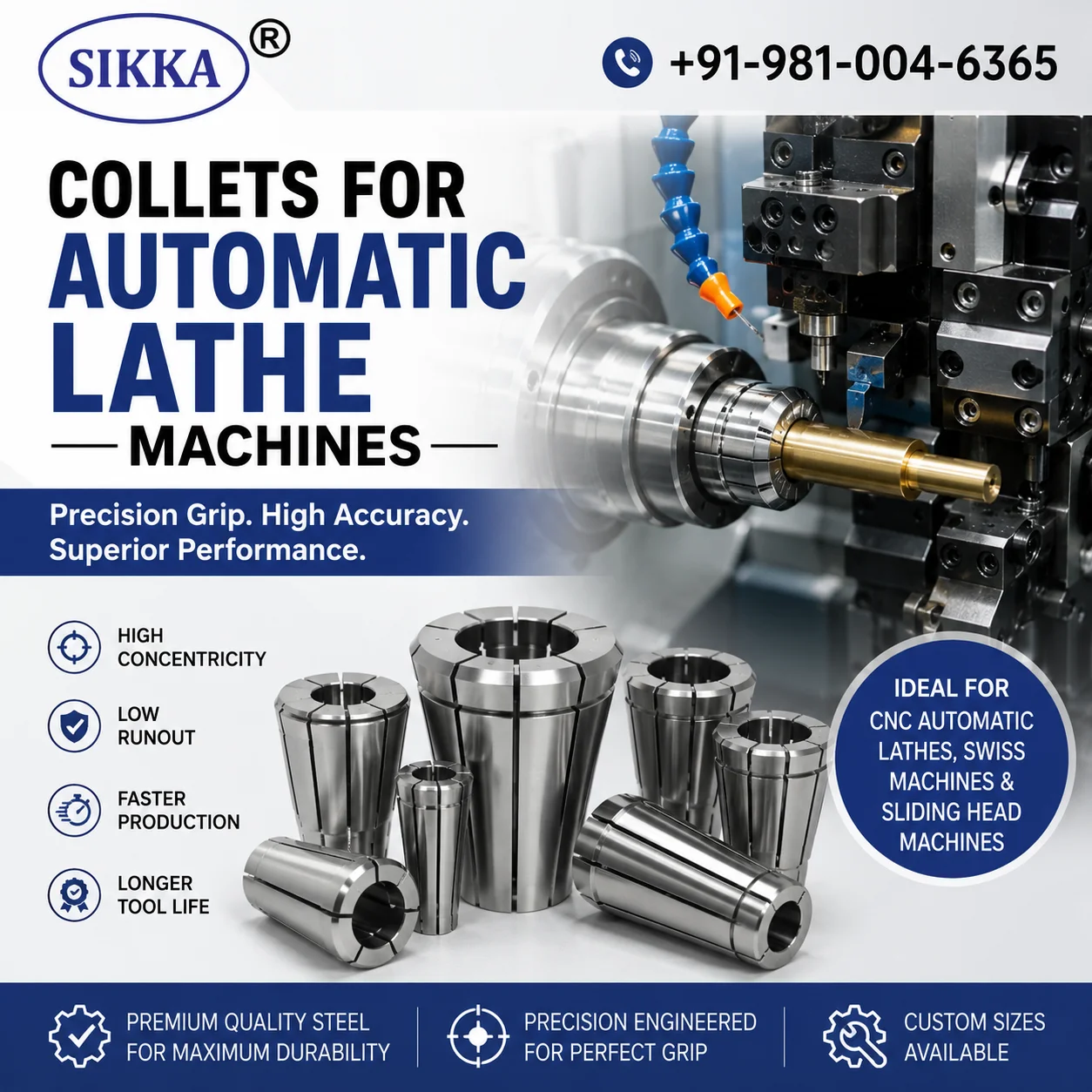
What Are Collets for Automatic Lathe Machines?
Collets for automatic lathe machines are precision work-holding devices designed to grip round, hexagonal, square, or specially profiled bars during machining operations. They apply uniform clamping pressure around the workpiece instead of gripping from only a few contact points.
This uniform gripping force minimizes runout and improves machining accuracy. It also allows automatic lathes to operate at higher spindle speeds with better stability.
Unlike conventional jaw chucks, collets for automatic lathe machines provide faster setup, better repeatability, and improved production efficiency.
What Is an Automatic Lathe Machine?
An automatic lathe machine performs machining operations with minimal operator intervention. These machines are widely used for high-volume production where accuracy and speed are equally important.
Automatic lathes continuously feed bar stock into the spindle. The installed collet securely grips the material while cutting tools perform turning, drilling, threading, grooving, or finishing operations.
Different industries rely on automatic lathe machines to manufacture precision parts with tight tolerances.
- Automotive components
- Electrical parts
- Medical instruments
- Hydraulic fittings
- Fasteners
- Aerospace components
- Brass turned parts
How Do Collets for Automatic Lathe Machines Work?
The working principle of collets for automatic lathe machines is simple but highly effective.
The bar stock enters the spindle.
The collet closes uniformly around the material.
The spindle rotates at the required speed.
The cutting tools perform machining operations.
After machining, the collet releases the finished component automatically for the next production cycle.
This process reduces setup time and supports continuous manufacturing.
Why Are Collets Better Than Standard Chucks?
Many manufacturers prefer collets for automatic lathe machines because they offer several advantages over traditional three-jaw chucks.
| Collets | Standard Chucks |
|---|---|
| 360° uniform gripping | Three-point gripping |
| Higher concentricity | Higher runout |
| Fast changeover | Longer setup time |
| Better high-speed stability | More vibration |
| Ideal for mass production | Suitable for general machining |
If you want to understand the difference in more detail, read our guide on Advantages of Collet Chucks Over Three Jaw Chucks.
Types of Collets for Automatic Lathe Machines
1. Round Collets
Round collets are used for machining cylindrical bar stock. They provide excellent concentricity and are widely used in automatic production.
2. Hex Collets
These collets securely hold hexagonal bars without slipping during machining.
3. Square Collets
Square collets are designed for square-section workpieces that require accurate positioning.
4. Emergency Collets
Emergency collets have machinable bores. They can be customized for unique workpiece profiles.
5. Guide Bush Collets
Guide bush collets support long bar stock close to the cutting zone. They are widely used in Swiss-type automatic lathes.
For a complete understanding of different designs, visit our guide on How to Identify Different Types of Collets.
Automatic Lathe Machines Compatible with These Collets
High-quality collets for automatic lathe machines are manufactured for various machine brands and models.
- Traub Automatic Lathes
- Citizen Sliding Head Machines
- Star Swiss Machines
- Tsugami CNC Machines
- Tornos Automatic Lathes
- Petermann Machines
- Hanwha CNC Machines
- Cam Type Automatic Lathes
- Sliding Head Automatic Machines
- CNC Turning Centers
If you use Traub machines, you may also find our detailed guide on Traub Collets useful.
Materials Used to Manufacture Collets for Automatic Lathe Machines
The quality of raw material directly affects the life and performance of collets for automatic lathe machines.
Professional manufacturers use premium-grade alloy steels that provide high wear resistance and consistent gripping force.
Common materials include:
- High-grade Spring Steel
- Alloy Steel
- Hardened Tool Steel
After machining, every precision collet undergoes controlled heat treatment, precision grinding, dimensional inspection, and quality testing before dispatch.
The use of premium steel ensures better durability even under high-speed production.
Features of High-Quality Collets for Automatic Lathe Machines
- High gripping force
- Excellent concentricity
- Low runout
- Precision ground surfaces
- Long operational life
- Consistent clamping pressure
- Better surface finish
- Reduced vibration
- High wear resistance
- Stable performance during continuous production
Many of these characteristics depend on precision manufacturing. Learn more in our article on How Collet Manufacturers Ensure Precision and Durability.
How to Choose the Right Collets for Automatic Lathe Machines
Selecting the correct collets for automatic lathe machines is essential for maintaining machining accuracy and minimizing production losses.
Before purchasing a collet, always evaluate these factors.
- Machine manufacturer and model
- Bar diameter
- Component material
- Required machining tolerance
- Production volume
- Maximum spindle speed
- Surface finish requirements
- Application type
- Expected collet life
A properly selected collet reduces vibration, improves repeatability, and increases overall machining efficiency.
For additional guidance, read our detailed article on How to Choose the Right Collet for Your Machining Needs.
Industries That Use Collets for Automatic Lathe Machines
Collets for automatic lathe machines are used across industries where dimensional accuracy and repeatability are critical. These collets help manufacturers achieve consistent production with minimum rejection.
- Automotive Components
- Aerospace Parts
- Medical Equipment
- Electrical Connectors
- Hydraulic & Pneumatic Components
- Fastener Manufacturing
- Brass Turned Components
- Industrial Machinery Parts
Industries that manufacture thousands of identical parts every day depend on high-quality collets for automatic lathe machines to maintain production consistency.
Common Problems Caused by Low-Quality Collets
Many machining problems originate from poor-quality or worn-out collets. Replacing cutting tools alone does not solve these issues if the collet is the actual cause.
Common problems include:
- Excessive runout
- Poor gripping force
- Component slipping
- Rough surface finish
- Dimensional variation
- Machine vibration
- Frequent tool breakage
- Higher rejection rates
- Production downtime
These issues reduce machining efficiency and increase manufacturing costs.
Read more about these issues in our guide on Common Collet Problems and Solutions.
Maintenance Tips for Collets for Automatic Lathe Machines
Proper maintenance increases the life of collets for automatic lathe machines. It also helps maintain gripping accuracy during continuous production.
Follow these best practices.
- Clean the collet after every production cycle.
- Remove chips and dust before installation.
- Inspect the gripping surface regularly.
- Check for wear and deformation.
- Store collets in a clean and dry environment.
- Replace damaged collets immediately.
- Use only recommended torque during installation.
Routine maintenance prevents unexpected machine stoppages and improves machining quality.
Read our detailed guide on Collet Handling, Cleaning and Replacement.
Why Precision Grinding Matters in Collet Manufacturing
Precision grinding is one of the most important manufacturing stages for collets for automatic lathe machines. Even a small dimensional variation can affect gripping accuracy.
A precision-ground collet provides:
- Lower runout
- Better concentricity
- Higher clamping accuracy
- Longer service life
- Improved surface finish
- Consistent machining quality
This is why professional manufacturers invest in advanced grinding and inspection equipment before delivering finished products.
Custom Collets for Automatic Lathe Machines
Standard collets do not always meet every production requirement. Many manufacturers require custom solutions for unique applications.
Custom collets for automatic lathe machines can be manufactured for:
- Special bore sizes
- Custom diameters
- Square profiles
- Hexagonal profiles
- Special workpiece shapes
- OEM machine requirements
Custom manufacturing improves gripping stability and increases machining efficiency for specialized production lines.
Why Choose Sikka Sales Corporation?
Sikka Sales Corporation is one of the trusted manufacturers of precision collets for automatic lathe machines in India. The company manufactures high-quality collets using premium-grade steel and advanced precision grinding processes.
Every product undergoes strict quality inspection to ensure dimensional accuracy, reliable gripping force, and long operational life.
Our manufacturing capabilities include:
- Premium quality steel
- Precision grinding
- Heat-treated components
- Tight dimensional tolerances
- Custom collet manufacturing
- Bulk production capability
- Consistent quality inspection
- Fast delivery support
If you are looking for dependable collets for automatic lathe machines, our experienced team can help you choose the right solution for your machining application.
About Sikka Precision Technologies
Sikka Precision Technologies is professionally owned and operated. The company manufactures high-quality precision collets for diverse industrial applications. Premium-grade steel is used throughout the manufacturing process to deliver consistent performance, durability, and machining accuracy.
Our focus is precision engineering, strict quality control, and customer satisfaction. Every collet is manufactured to meet demanding industrial standards for reliable performance in production environments.
Contact Information
Sikka Sales Corporation
31/3F, Street No. 1,
Anand Parbat Industrial Area,
New Delhi – 110005, India
Phone: +91-981-004-6365
Google Business Listing:
View Our Google Map Location
Frequently Asked Questions
What are collets for automatic lathe machines?
Collets for automatic lathe machines are precision work-holding devices that securely grip bar stock during machining operations. They provide high concentricity and consistent clamping force.
Which material is best for manufacturing collets?
High-grade spring steel and alloy steel are commonly used because they offer excellent wear resistance, durability, and gripping performance.
How often should collets be replaced?
Replacement depends on production volume, operating conditions, and maintenance practices. Worn or damaged collets should be replaced immediately.
Can one collet hold multiple bar sizes?
No. Every collet has a specific clamping range. Using the wrong size reduces gripping force and machining accuracy.
Which industries use collets for automatic lathe machines?
They are widely used in automotive, aerospace, medical, electrical, hydraulic, brass component, and fastener manufacturing industries.
Can custom collets be manufactured?
Yes. Custom collets can be produced for special profiles, bore sizes, machine models, and OEM applications.
Why is precision grinding important?
Precision grinding improves concentricity, reduces runout, increases gripping accuracy, and extends the service life of the collet.
How do I choose the correct collet?
Select a collet based on machine model, workpiece diameter, material, spindle speed, production volume, and required machining tolerance.
Conclusion
Choosing the right collets for automatic lathe machines is essential for achieving consistent machining accuracy, higher productivity, and longer tool life. A precision-manufactured collet reduces runout, improves gripping performance, minimizes vibration, and supports reliable high-speed production.
Investing in premium collets for automatic lathe machines also reduces machine downtime and lowers overall production costs. Manufacturers who prioritize precision tooling consistently achieve better component quality and improved operational efficiency.
If you need standard or custom collets for automatic lathe machines, Sikka Sales Corporation offers precision-engineered solutions backed by quality manufacturing, industry expertise, and dependable customer support.