
DIN 6499 ER tap collet maintenance is one of the most important factors in precision CNC machining. Many manufacturers invest heavily in advanced machines and cutting tools, yet they often ignore the condition of their collets. This small mistake can reduce machining accuracy, increase vibration, and shorten tool life.
A properly maintained ER tap collet provides stable gripping force and supports smooth threading operations. On the other hand, poor maintenance creates alignment problems, excessive runout, and inconsistent thread quality. Therefore, machine operators should follow proper maintenance routines to achieve reliable machining performance.
Modern industries demand higher precision and faster production speeds. As a result, tooling components must perform consistently under continuous operating conditions. Regular DIN 6499 ER tap collet maintenance not only improves machining quality but also reduces downtime and repair costs.
What Makes DIN 6499 ER Tap Collets Important in CNC Machining?
DIN 6499 ER tap collets are specially designed to hold taps securely during threading applications. These collets provide excellent concentricity and distribute gripping pressure evenly around the tool shank.
Because of their precision design, they help maintain thread accuracy and improve machining stability. In high-speed machining environments, even slight movement can damage the tap or affect thread dimensions. Therefore, industries rely on precision-engineered ER tap collets for reliable tapping operations.
Manufacturers working with automotive, aerospace, industrial equipment, and precision engineering industries often prefer advanced collet systems because they reduce operational errors and improve production consistency.
Why DIN 6499 ER Tap Collet Maintenance Should Never Be Ignored?
Many machining problems begin with poor maintenance practices. Dirt, metal chips, coolant residue, and improper storage slowly affect collet performance. Although the damage may appear small initially, it gradually reduces clamping efficiency and increases machine vibration.
Ignoring DIN 6499 ER tap collet maintenance can create several operational issues:
- Frequent tap breakage during threading
- Uneven or damaged thread quality
- Higher machine vibration levels
- Increased spindle stress
- Reduced machining accuracy
- Premature wear of tooling components
- Production downtime and maintenance costs
Therefore, regular maintenance should become a standard part of every CNC machining operation.
Advanced DIN 6499 ER Tap Collet Maintenance Tips for Better Performance
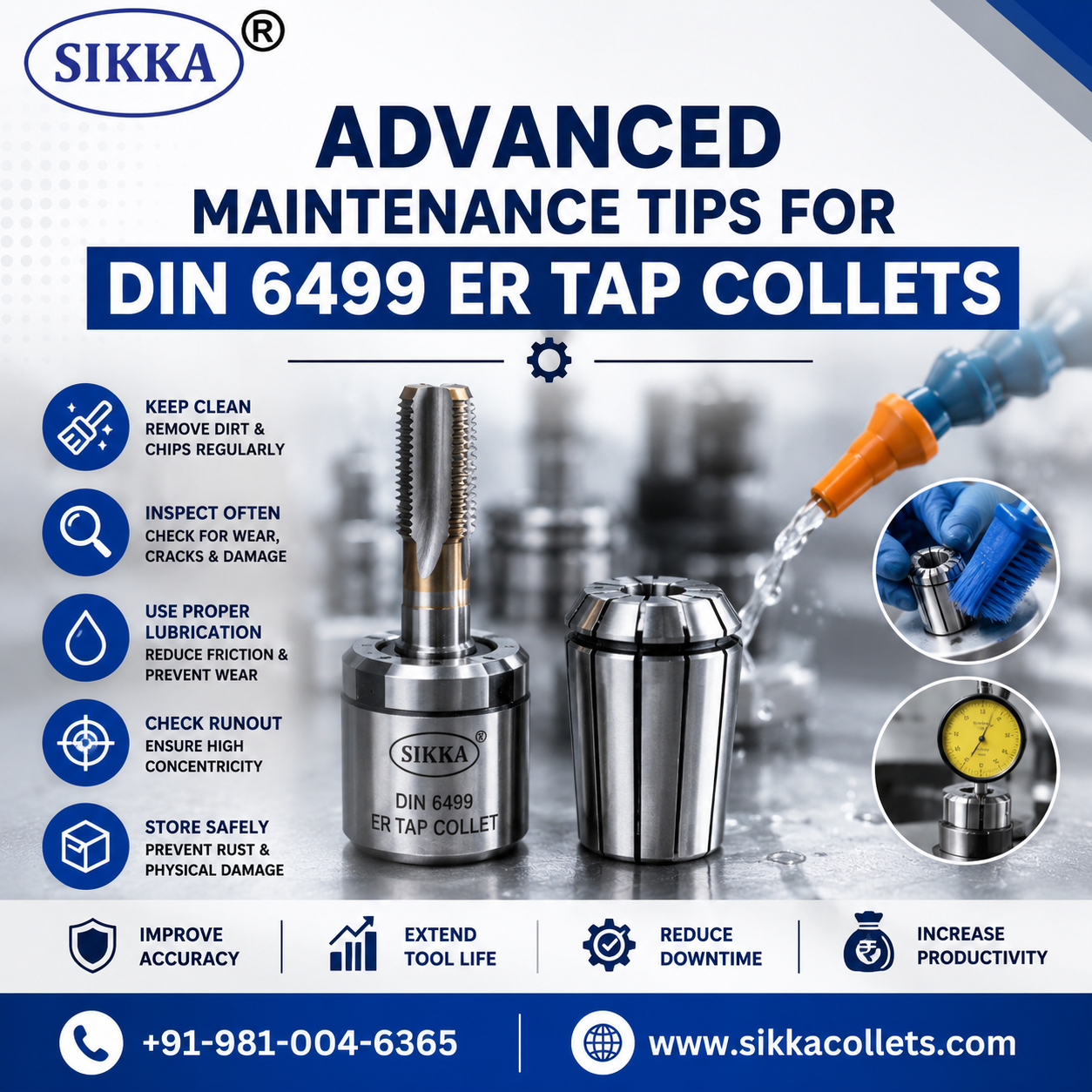
Clean ER Tap Collets After Every Production Cycle
Cleaning is one of the simplest yet most effective maintenance practices. During machining, coolant residue and fine metal particles collect inside the collet slots and gripping surfaces.
If operators ignore this contamination, the collet loses gripping accuracy over time. Consequently, the tap may slip or create inconsistent threads during operation.
Machine operators should clean collets carefully using soft brushes, compressed air, or lint-free cloths. However, aggressive cleaning tools should be avoided because they may scratch precision surfaces.
Regular cleaning improves gripping strength and helps maintain smooth machining performance.
Inspect Collets Carefully Before Installation
Visual inspection plays an important role in DIN 6499 ER tap collet maintenance. Small cracks, dents, or surface wear often affect machining precision more than expected.
Operators should inspect both internal and external surfaces before installing the collet into the machine spindle. Even minor deformation can increase runout and reduce threading accuracy.
Routine inspection also helps manufacturers identify worn collets before they cause expensive production problems.
Use Correct Tightening Torque
Over-tightening remains a common mistake in many machine shops. Excessive force changes the collet shape and creates uneven gripping pressure.
At the same time, insufficient tightening may allow the tap to move during cutting operations. Therefore, operators should always follow the recommended tightening torque for safe and stable machining.
Balanced tightening pressure helps maintain proper concentricity and protects the collet from structural damage.
Monitor Collet Runout Frequently
Runout directly affects thread quality and machining precision. Even slight alignment issues may increase tool vibration and reduce surface finish quality.
Manufacturers should regularly measure runout using precision inspection equipment. Maintaining low runout improves tap stability and extends tool life significantly.
High-quality ER collets are widely preferred because they provide better concentricity and stable gripping performance in demanding machining environments.
Apply Proper Lubrication Practices
Lubrication helps reduce friction between moving components and protects the collet from premature wear. However, excessive lubrication may attract dust and metal particles.
Operators should apply lubrication carefully and remove excess oil after maintenance procedures. Proper lubrication improves clamping efficiency and supports smoother tapping operations.
Store ER Tap Collets in a Clean Environment
Storage conditions greatly influence tooling durability. Moisture, dirt, and accidental impact often damage precision collets even before they reach the machine spindle.
Manufacturers should store collets inside organized storage trays or protective holders. In addition, keeping different collet sizes separated helps prevent scratches and handling damage.
Clean storage practices also reduce corrosion risks and maintain long-term dimensional accuracy.
How Precision Tool Holding Improves Tapping Performance?
The overall performance of a tapping operation depends heavily on tool holding stability. Weak or poorly aligned tooling systems create vibration and reduce cutting efficiency.
Therefore, many manufacturers use high-quality collet chucks to improve machining stability and maintain proper tool alignment.
Strong tool holding systems also reduce spindle stress and support smoother production cycles during high-speed operations.
Common Mistakes That Reduce ER Tap Collet Life
Several maintenance mistakes shorten collet life and affect machining accuracy. Machine operators should avoid these problems whenever possible:
- Ignoring regular cleaning schedules
- Using damaged or worn collets
- Applying excessive tightening pressure
- Using incorrect collet sizes
- Storing collets in humid conditions
- Running machines with excessive vibration
- Skipping routine inspection procedures
Avoiding these mistakes helps improve operational efficiency and reduces unnecessary tooling costs.
Premium-quality collets provide better gripping force, improved concentricity, and longer operational life. As a result, manufacturers achieve more stable machining performance and higher threading accuracy.
Reliable DIN 6499 ER tap collets are specially designed for demanding industrial applications where precision and durability are critical.
Industries also prefer durable tapping collets because they support smooth tapping operations while reducing downtime caused by tool slippage or vibration.
How Preventive Maintenance Improves Production Efficiency?
Preventive maintenance reduces unexpected machine failures and helps manufacturers maintain consistent production quality. Instead of waiting for tooling problems to appear, machine shops should follow scheduled maintenance routines.
Regular DIN 6499 ER tap collet maintenance improves:
- Machine productivity
- Thread quality consistency
- Tool life
- Operational safety
- Production stability
- Machining precision
These improvements directly support better manufacturing performance and lower operating costs.
Industrial Standards and Precision Tooling Practices
Precision machining industries often follow international tooling standards to maintain operational quality and accuracy. Standardized maintenance practices help manufacturers achieve consistent machining results across different production environments.
Conclusion
DIN 6499 ER tap collet maintenance is essential for achieving stable machining performance and longer tool life. Proper cleaning, inspection, lubrication, and storage practices help reduce runout, vibration, and threading errors.
Manufacturers that prioritize preventive maintenance usually experience better production consistency and lower downtime. In addition, investing in precision tooling systems improves machining accuracy and supports long-term operational efficiency.
As CNC machining continues to demand higher precision, maintaining ER tap collets properly becomes even more important for industrial success.