
R8 collet milling problems can quietly reduce machining quality before operators even notice the real cause. Many workshops focus only on cutting tools or machine settings. However, the collet also plays a major role in milling accuracy. A low-quality R8 collet can create vibration, poor surface finish, cutter instability, and spindle stress during regular operations.
In precision machining, even a small holding error affects the final output. Therefore, manufacturers always prefer durable and accurately machined R8 collets and milling accessories for stable performance and long-term reliability.
Many milling operators experience machining issues repeatedly without realizing that the actual problem starts from poor tool holding. Once the collet loses gripping accuracy, the entire cutting process becomes unstable. As a result, production quality drops and operating costs increase.
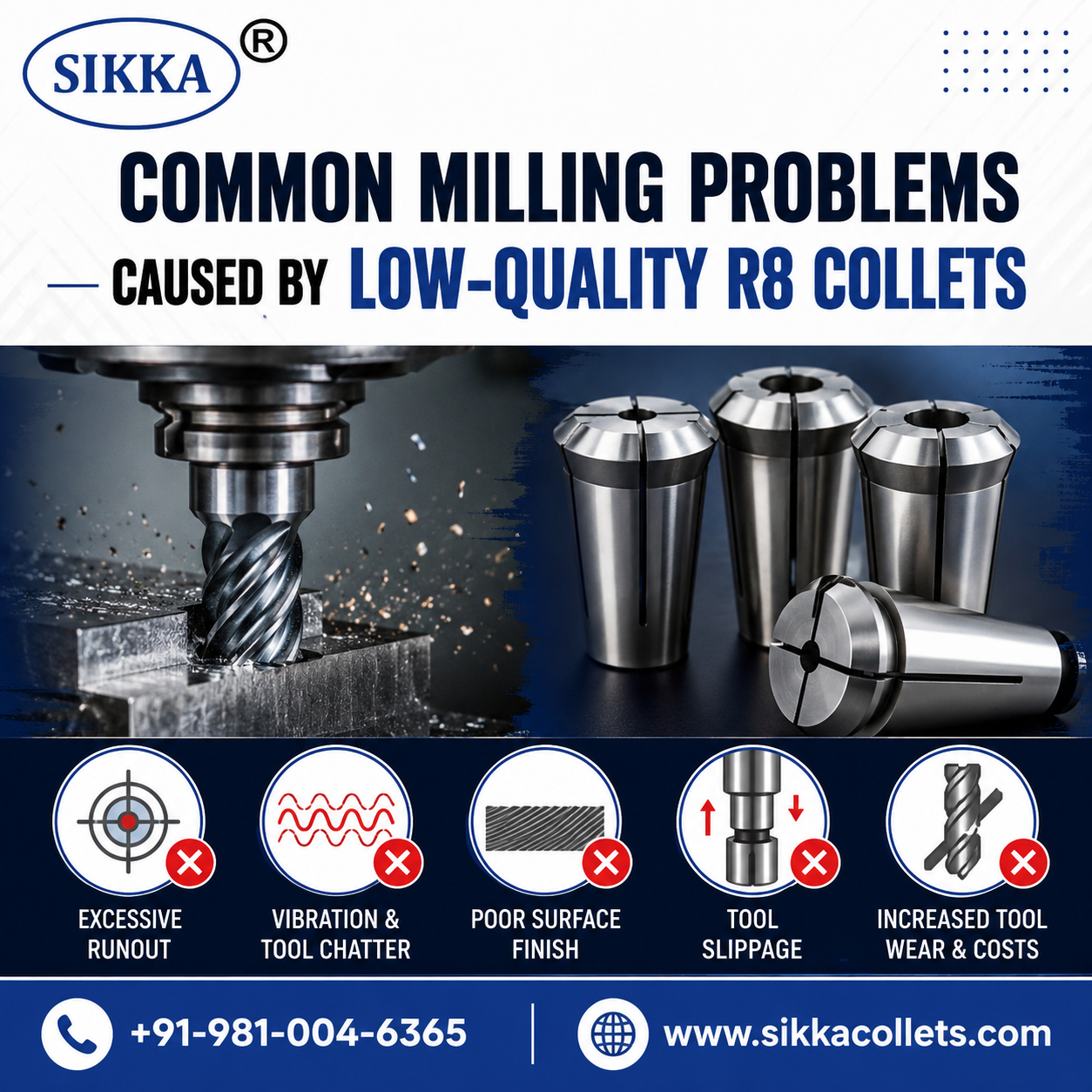
How Low-Quality R8 Collets Affect Milling Performance
An R8 collet is designed to hold the cutting tool firmly inside the milling spindle. The tool must stay centered during high-speed rotation. If the collet is poorly manufactured, it cannot maintain proper alignment.
Low-grade materials, weak spring tension, and inaccurate internal dimensions often create instability during machining. Consequently, operators notice inconsistent cutting results, unwanted vibration, and reduced tool life.
In many workshops, these issues appear slowly. Initially, the machine may work normally. Over time, machining accuracy starts decreasing because the collet loses its original clamping strength.
Runout Problems That Reduce Machining Accuracy
Excessive runout is one of the most common R8 collet milling problems in industrial machining. Runout happens when the cutting tool rotates unevenly instead of staying perfectly centered.
Even a minor deviation creates major accuracy problems during milling operations. The cutter removes extra material from one side while the opposite edge cuts less. Because of this imbalance, the workpiece dimensions become inconsistent.
Furthermore, excessive runout creates additional pressure on spindle bearings and cutting tools. Over time, this problem reduces machine efficiency and increases maintenance expenses.
Signs That Indicate Runout Issues
- Uneven cutting marks on the workpiece
- Difficulty maintaining tight tolerances
- Faster cutter wear
- Irregular tool rotation
- Extra vibration at higher spindle speeds
- Reduced machining consistency
Precision tool-holding solutions like ER collets are widely used in many machining applications because they offer improved concentricity and gripping accuracy.
Tool Chatter Creates Surface and Stability Issues
Tool chatter develops when the cutter vibrates repeatedly during machining. This issue becomes more severe when low-quality R8 collets fail to hold the cutting tool securely.
Instead of rotating smoothly, the cutter starts producing small vibrations during operation. These vibrations affect both machining quality and machine stability.
As chatter increases, operators usually hear unusual cutting sounds. In addition, the workpiece surface develops visible vibration marks that reduce finishing quality.
Continuous chatter also damages spindle components over time. Therefore, stable tool holding becomes extremely important in heavy milling applications.
Common Reasons Behind Tool Chatter
- Weak clamping force inside the collet
- Improper collet manufacturing tolerance
- Worn-out internal gripping surfaces
- Damaged spindle taper
- Low-grade collet material quality
Using properly balanced tool-holding systems can significantly reduce vibration during milling operations.
Poor Surface Finish on Machined Parts
Surface finish quality directly reflects machining stability. When the cutting tool vibrates or shifts during milling, the finished component develops rough textures and visible cutting marks.
Many industries require smooth and accurate surface finishes for proper assembly and product quality. However, low-quality R8 collets make it difficult to maintain consistent finishing standards.
In precision manufacturing sectors, poor finishing often increases secondary polishing and rework costs. Consequently, production efficiency decreases.
Reliable tool-holding systems such as precision collet chucks help improve machining consistency and support smoother cutting performance.
Tool Slippage During Heavy Milling Operations
Tool slippage is another serious issue connected with low-grade collets. During aggressive cutting operations, weak clamping force allows the cutter to move slightly inside the holder.
Even minimal movement affects cutting depth and dimensional accuracy. In some cases, the cutter may pull out completely during operation. This situation can damage expensive workpieces and create safety risks inside the workshop.
Heavy-duty milling applications require strong and reliable gripping performance. Therefore, manufacturers generally prefer hardened and precision-ground collets for demanding machining conditions.
Short Tool Life and Increased Production Costs
Many workshops spend large amounts on cutting tool replacement without identifying the actual reason behind tool failure. In reality, unstable tool holding often accelerates cutter wear.
When the tool vibrates continuously, the cutting edges experience uneven pressure. As a result, tools become dull much faster than expected.
Frequent cutter replacement increases machining costs and reduces production efficiency. Additionally, machine downtime rises because operators need to stop operations repeatedly for tool changes.
Precision machining applications also depend on accurate gripping systems like DIN 6499 ER tap collets for better holding stability during tapping operations.
Spindle Damage Caused by Poor Collet Quality
Many operators ignore the long-term effect of low-quality collets on the spindle system. However, continuous vibration and imbalance place additional stress on spindle bearings.
Over time, bearing wear increases and spindle accuracy starts decreasing. Once spindle alignment becomes unstable, the machine cannot maintain precision cutting performance.
Spindle repair costs are usually much higher than replacing low-grade collets with precision-engineered alternatives. Therefore, investing in quality tool-holding components helps protect the machine itself.
How to Identify a Low-Quality R8 Collet
Identifying poor-quality collets before installation can prevent several machining problems. Operators should carefully inspect both the external finish and internal gripping surfaces.
Important Quality Checks Before Use
- Check for uneven slot spacing
- Inspect surface finishing quality
- Measure runout accuracy
- Verify internal dimensions
- Inspect spring flexibility
- Look for visible grinding defects
- Ensure proper taper accuracy
Consistent inspection routines improve overall machining reliability and reduce unexpected production problems.
Maintenance Tips to Reduce R8 Collet Milling Problems
Proper maintenance plays a major role in extending collet life and maintaining machining accuracy. Even high-quality collets lose performance if operators ignore regular cleaning and inspection.
Dirt, coolant residue, and metal chips often collect inside the collet slots. These particles reduce gripping performance and create alignment issues during operation.
Best Practices for Better Collet Performance
- Clean collets after every machining cycle
- Store collets in dry and dust-free areas
- Replace damaged collets immediately
- Avoid overtightening during installation
- Inspect spindle taper regularly
- Use collets only within their size range
- Purchase collets from trusted manufacturers
According to Cutting Tool Engineering, precision tool holding is essential for maintaining machining accuracy, spindle protection, and longer tool life.
Choosing the Right R8 Collet for Precision Milling
Selecting the correct R8 collet improves machining stability and overall productivity. Precision-ground collets provide better gripping force, reduced runout, and smoother spindle rotation.
Manufacturers should always choose collets based on machining load, spindle speed, and application requirements. High-quality tool-holding systems may cost more initially, but they reduce maintenance costs and improve production consistency over time.
Reliable collets also help operators achieve better surface finishes, improved dimensional accuracy, and longer cutter life across various milling applications.
Conclusion
R8 collet milling problems can seriously affect machining quality, spindle health, and production efficiency. Low-quality collets often create vibration, runout, tool chatter, and cutter slippage during milling operations.
Therefore, using precision-engineered collets is essential for stable machining performance. High-quality tool holding improves accuracy, protects machine components, and reduces long-term operating costs.
With proper collet selection, regular inspection, and routine maintenance, manufacturers can achieve smoother milling operations and more consistent machining results.