
ER tap collet slippage issues can reduce machining accuracy and damage threaded components. In many CNC tapping operations, tool slippage leads to poor thread quality, broken taps, and machine downtime. Therefore, manufacturers must identify the root causes quickly and apply the right solutions to maintain precision and productivity.
Proper tool holding improves tapping stability and extends tool life. In addition, high-quality collets help reduce vibration and maintain a strong grip during machining operations.
Introduction to ER Tap Collet Slippage Issues
ER tap collet systems are widely used in precision machining because they provide reliable clamping force and accurate tool positioning. However, ER tap collet slippage issues may still occur when the setup is incorrect or the collet becomes worn.
These problems affect thread consistency and reduce machining efficiency. As a result, operators often experience uneven tapping performance and increased tool wear.
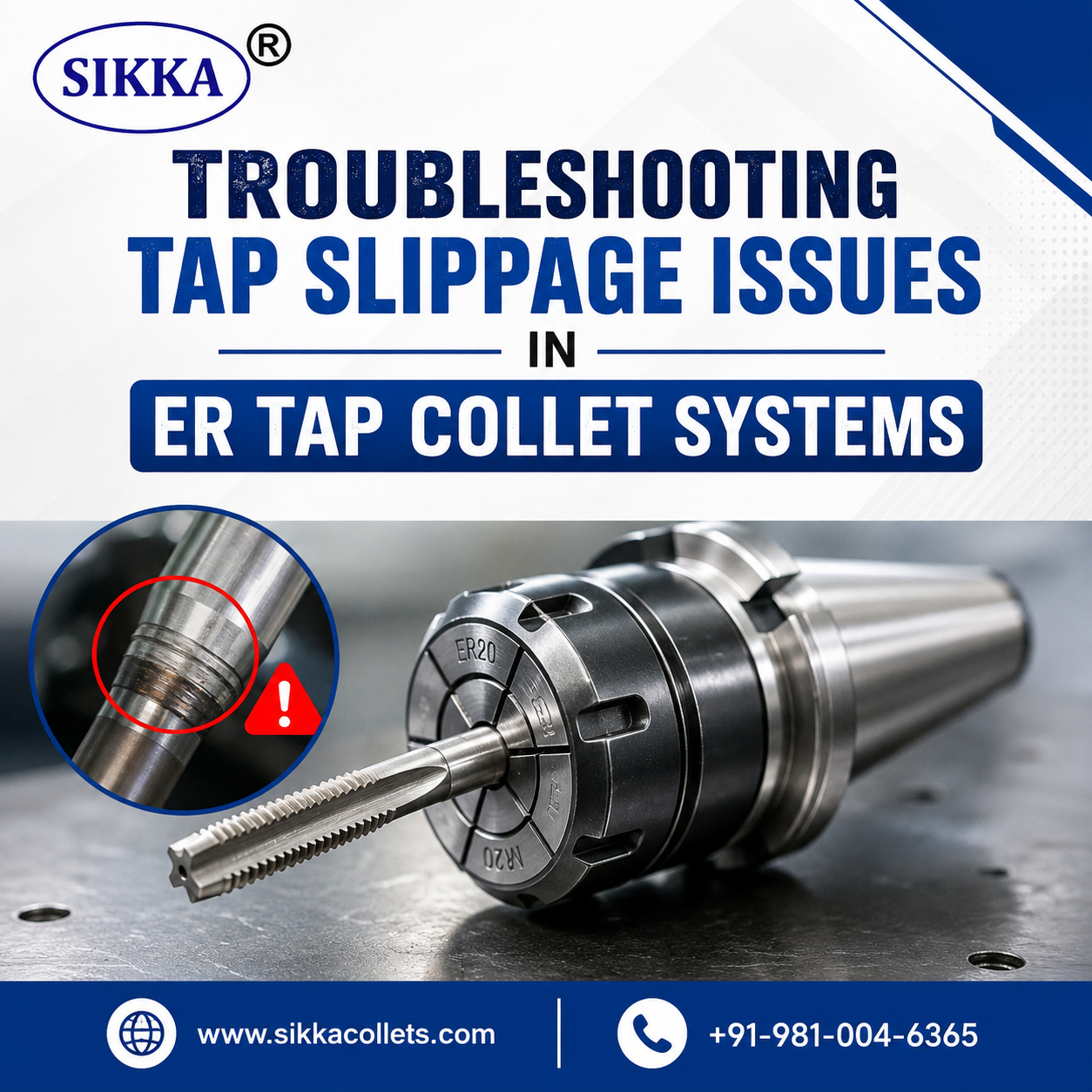
Using high-quality tapping collets helps improve gripping performance and supports stable machining operations.
What Causes ER Tap Collet Slippage Issues?
Several factors contribute to ER tap collet slippage issues. Understanding these causes helps machine operators prevent costly production errors.
Incorrect Collet Size Selection
A mismatched collet cannot hold the tap securely. Consequently, the tool may move during rotation and create inaccurate threads.
Operators should always select the correct ER tap collets DIN 6499 for the specific tapping application.
Insufficient Clamping Force
Low tightening torque reduces gripping strength. Because of this, the tap may slip under high cutting pressure.
Proper torque application improves holding stability and reduces vibration during machining.
Worn-Out ER Tap Collets
Damaged or worn collets lose their clamping efficiency over time. In addition, dirt and metal particles inside the collet system can affect performance.
Regular inspection helps identify wear before major machining problems occur.
Poor Machine Alignment
Incorrect spindle alignment creates uneven pressure on the tool holder. As a result, ER tap collet slippage issues become more common during high-speed operations.
Maintaining proper alignment improves tapping precision and protects the tool holding system.
Common Signs of ER Tap Collet Slippage Issues
Machine operators should monitor several warning signs during tapping operations.
- Irregular thread quality
- Visible tool movement
- Frequent tap breakage
- Excessive vibration during machining
- Reduced dimensional accuracy
- Unusual wear on the tap shank
Early detection prevents expensive downtime and improves machining consistency.
How to Fix ER Tap Collet Slippage Issues?
Use the Correct ER Tap Collet Size
The correct collet size provides better gripping force and minimizes movement during tapping operations. Therefore, operators should always verify tool dimensions before installation.
High-precision ER collets improve tool holding accuracy and support smooth machining performance.
Inspect Collet Chucks Regularly
Clean and inspect collet chucks regularly to remove chips, dust, and oil buildup. In addition, damaged holders should be replaced immediately.
Using reliable collet chucks helps maintain consistent clamping pressure and reduces machining errors.
Maintain Proper Tightening Torque
Correct tightening torque improves grip strength and prevents unnecessary movement. Over-tightening can also damage the collet system. Therefore, machine operators should follow manufacturer guidelines carefully.
Replace Damaged Collets on Time
Old or cracked collets reduce machining accuracy. Replacing worn components improves tapping consistency and protects expensive cutting tools.
Best Practices to Prevent Tap Slippage in CNC Operations
Preventive maintenance plays a major role in reducing ER tap collet slippage issues. Operators should follow proper machining practices for long-term performance.
- Use clean and damage-free collets
- Check spindle alignment regularly
- Apply recommended tightening torque
- Inspect tool holders before machining
- Use high-quality tapping accessories
- Store collets in a clean environment
Choosing High-Quality ER Tap Collet Systems
High-quality collet systems improve machining stability and increase production efficiency. In addition, precision-engineered collets reduce vibration and provide stronger gripping force.
Manufacturers should invest in reliable tooling systems that support accurate tapping applications and long-term machining performance.
Why Precision Tool Holding Matters in Tapping Applications
Precision tool holding directly affects thread quality, machining speed, and operational safety. Stable clamping minimizes tool movement and supports accurate cutting performance.
Advanced collet systems also help reduce machine downtime and improve overall production efficiency.
Conclusion
ER tap collet slippage issues can negatively impact machining accuracy, thread quality, and tool life. However, proper collet selection, regular maintenance, and accurate tightening practices help prevent these problems effectively.
Using high-quality ER tap collet systems improves gripping performance and supports stable CNC tapping operations. As a result, manufacturers achieve better precision, reduced tool wear, and higher machining productivity.