
Often, small parts like collet nuts silently affect accuracy, vibration levels, and production efficiency. Many workshops struggle with inconsistent machining results without realizing that the issue lies in using the wrong collet nut for the wrong operation.
This blog follows a problem–diagnosis–solution structure to clearly explain how collet nuts differ in CNC milling and CNC turning — and how choosing correctly can protect your machine, tooling, and profits.
The Real-World Problem Most Workshops Face
You may notice:
- Excessive vibration in milling
- Tool runout increasing over time
- Poor surface finish despite correct parameters
- Workpiece slipping in turning operations
- Unusual spindle noise
In many cases, operators replace tools or blame machine calibration. However, the root cause may be improper collet nut selection.
Why Milling and Turning Are Fundamentally Different?
Before understanding collet nuts, we must understand machine behavior.
CNC Milling Environment
- Cutting tool rotates at high RPM
- Workpiece remains stationary
- Cutting forces change direction frequently
- High dynamic load and vibration
Because of this, milling setups require collet nuts that maintain rotational balance and concentricity under speed.
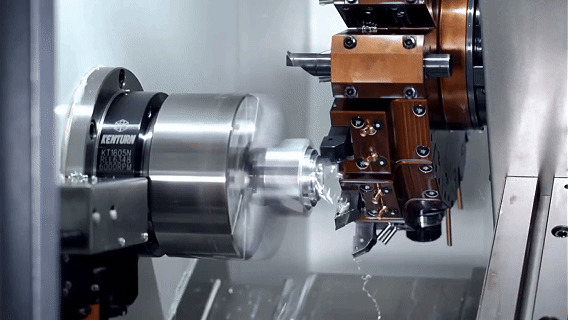
Tool-holding systems like ER collets are widely used in milling because they offer strong clamping flexibility and precise tool alignment. The nut design in such systems plays a crucial role in maintaining balance at high speeds.
CNC Turning Environment
- Workpiece rotates
- Tool remains comparatively stable
- Cutting forces are more consistent
- Heavy torque is common
Here, the collet nut’s primary job is to maintain gripping strength and resist axial forces.
Work-holding systems such as 5C collets are often used in turning because they provide reliable bar holding during continuous rotation.
The Hidden Technical Differences in Collet Nuts
Now let us examine the structural and functional differences.
1. Design Priorities
Milling Collet Nuts Focus On:
- High-speed balance
- Vibration reduction
- Even pressure distribution
Turning Collet Nuts Focus On:
- Strong torque resistance
- Rigidity under load
- Secure axial clamping
Even if two nuts look similar externally, their internal geometry and strength characteristics can differ significantly.
2. Load Direction Management
In milling, forces are multi-directional and intermittent. In turning, forces are steady and mainly axial with rotational torque.
This is why compatibility with properly engineered Collet chucks is critical. The nut and chuck must function as a balanced unit to avoid vibration or misalignment.
3. Precision and Tolerance Standards
High-accuracy machining depends on strict dimensional standards. Systems manufactured according to Din collets specifications maintain better tolerance control, which directly affects concentricity and clamping uniformity.
Without proper standards, even a strong nut can cause minor eccentricity — leading to surface finish problems.
Common Mistakes That Create Major Losses
Many manufacturers unintentionally make these errors:
- Using one type of collet nut for both milling and turning
- Ignoring recommended tightening torque
- Using worn-out threads
- Selecting generic, low-grade material nuts
- Failing to match nut type with collet system
In automatic lathes that use systems similar to Traub collets, incorrect nut compatibility can reduce holding reliability and production speed.
Symptoms That Indicate Wrong Collet Nut Selection
You may need to inspect your collet nut if you notice:
- Tool marks appearing unexpectedly
- Inconsistent dimensional accuracy
- Increased tool breakage
- Higher rejection rates
- Frequent need for re-tightening
These are early warning signs of imbalance or insufficient clamping.
The Practical Solution: How to Choose Correctly
Follow this structured approach:
Step 1: Identify Machine Type
Confirm whether the application is high-speed milling or heavy-load turning.
Step 2: Evaluate Speed Requirements
High RPM requires balanced nuts. Heavy torque requires reinforced designs.
Step 3: Inspect Collet Compatibility
Ensure the nut is engineered for your specific collet standard.
Step 4: Check Material Quality
Hardened alloy steel with proper heat treatment ensures durability.
Step 5: Verify Manufacturer Reputation
Always source from a reliable Collets Manufacturer that follows strict inspection and quality control practices.
How Quality Impacts Long-Term Productivity?
A well-designed collet nut contributes to:
- Lower vibration
- Improved surface finish
- Extended spindle life
- Reduced tool wear
- Better repeatability
A poorly designed nut may save money initially but increases maintenance cost and production losses over time.
The Engineering Approach of Sikka Collets
Sikka Collets focuses on precision engineering rather than generic mass production. Their manufacturing emphasizes:
- Advanced CNC machining
- Controlled heat treatment processes
- Thread precision and durability
- Balanced design for rotational stability
- Application-specific engineering
Instead of offering one-size-fits-all components, they align product design with real machining conditions — whether it involves high-speed milling or torque-intensive turning.
This engineering-driven approach ensures stability, performance consistency, and long service life in demanding industrial environments.
A Clear Side-by-Side Comparison
| Parameter | Milling Collet Nut | Turning Collet Nut |
| Main Role | Tool Holding | Work Holding |
| Speed Level | High RPM | Moderate RPM |
| Stress Type | Dynamic & Variable | Steady & Torque-Based |
| Primary Focus | Balance & Concentricity | Grip Strength |
| Risk if Incorrect | Vibration & Runout | Slippage & Dimensional Error |
Final Thoughts
Collet nuts are small components, but their role in CNC milling and turning is completely different.
- Milling demands precision balance and vibration resistance.
- Turning demands gripping strength and torque stability.
Using the wrong nut can compromise accuracy, reduce tool life, and increase scrap rate. Understanding these differences ensures better machine performance and improved productivity.
When precision matters, technical knowledge combined with quality manufacturing makes all the difference.
Contact Details
Address: 31/3F, Gali Number 1, Anand Parbat Industrial Area, Anand Parbat, Delhi, 110007 https://maps.app.goo.gl/jyTsiV57mJWgsh3k6
Contact: 09810046365