
Every minute of CNC machine downtime affects production. A stopped machine does more than pause one operation. It delays deliveries, increases operator idle time, interrupts production schedules, and may lead to additional inspection or rework. In precision machining, even a small interruption can impact the entire workflow.
Many machine shops focus on replacing worn components after a failure. A better approach is to identify the factors that lead to downtime before production stops. Tool holding, machine maintenance, operator practices, and process planning all play an important role.
This guide explains the common causes of CNC Machine Downtime, how to recognize warning signs early, and practical ways to reduce unnecessary production interruptions.
What Is CNC Machine Downtime?
CNC Machine Downtime is the period when a CNC machine cannot produce parts. The machine may be stopped for scheduled maintenance, setup changes, inspections, or unexpected failures. During this time, production remains idle until the machine is ready to resume machining.
Some downtime is necessary for machine reliability. However, frequent unplanned stoppages reduce productivity and make production planning difficult.
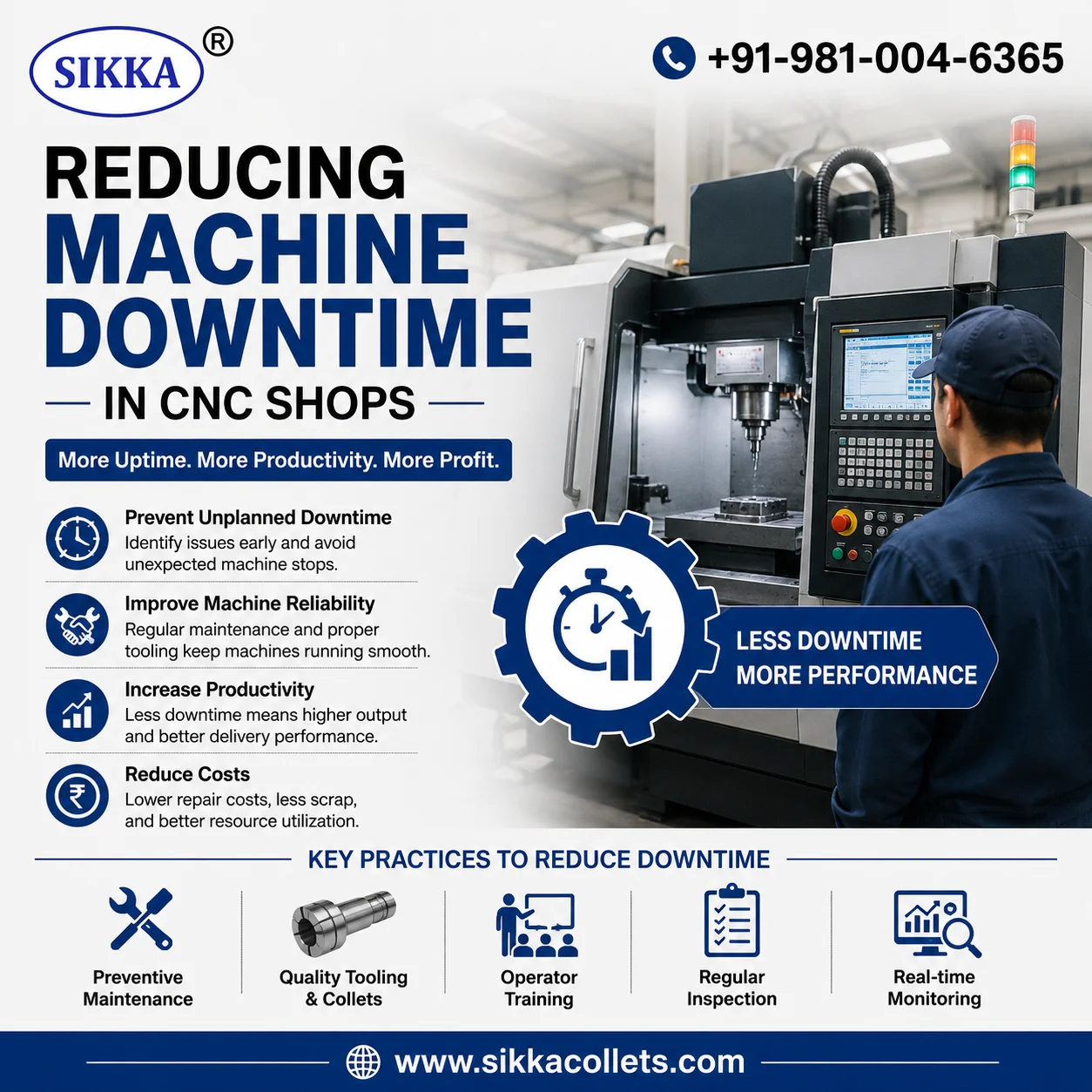
Types of CNC Machine Downtime
Planned Downtime
Planned downtime is scheduled in advance. It helps maintain machine performance and accuracy.
- Routine maintenance
- Machine calibration
- Tool replacement
- Fixture setup
- Program verification
- Operator training
Although production pauses during planned maintenance, it helps prevent larger breakdowns later.
Unplanned Downtime
Unplanned downtime happens unexpectedly. It usually interrupts production immediately.
- Spindle failure
- Servo or electrical faults
- Tool breakage
- Improper tool clamping
- Programming errors
- Power interruptions
- Operator mistakes
Most manufacturers work continuously to reduce unplanned CNC Machine Downtime because it directly affects delivery schedules and machine utilization.
Common Causes of CNC Machine Downtime
Machine failures rarely occur because of a single reason. In many shops, several small issues develop over time before causing production to stop.
1. Mechanical Wear
Machine components experience continuous stress during machining.
- Worn spindle bearings
- Damaged ball screws
- Linear guide wear
- Poor lubrication
- Hydraulic leakage
Ignoring these signs can eventually stop the machine unexpectedly.
2. Tool Holding Problems
Tool holding is often overlooked during troubleshooting. A worn or incorrectly selected collet may reduce gripping force. This increases vibration, runout, and tool movement during machining.
Proper CNC tool holding systems help maintain machining stability and reduce unnecessary stoppages.
3. Tool Wear and Breakage
Cutting tools naturally wear with use. Continuing production beyond the recommended tool life increases the risk of poor surface finish, dimensional variation, and sudden tool failure.
Regular inspection helps reduce unexpected CNC Machine Downtime.
4. Incorrect Collet Selection
Using the wrong collet size or a worn collet affects machining accuracy. Poor gripping force may allow slight tool movement during cutting.
Choosing the correct collet improves machining consistency. Understanding how to choose the right collet helps prevent unnecessary setup problems.
5. Programming and Setup Errors
Loading the wrong CNC program or incorrect work offsets can stop production immediately. Even a small setup mistake may produce scrap parts before the issue is detected.
6. Chip Accumulation
Excess chips reduce coolant flow and interfere with machining. Poor chip evacuation also increases cutting temperature and accelerates tool wear.
7. Coolant Issues
Low coolant level, contamination, or improper flow can increase heat generation. Excessive heat affects both tool life and machining accuracy.
Hidden Reasons Behind Frequent CNC Machine Downtime
Many production interruptions begin with small issues that receive little attention.
- Loose fixtures
- Improper torque while tightening collets
- Machine vibration during heavy cuts
- Thermal expansion after continuous operation
- Poor spindle warm-up
- Improper feed and speed selection
- Dirty tool holders
- Delayed replacement of worn collets
These problems may appear minor individually. Together, they often result in repeated CNC Machine Downtime.
What Does CNC Machine Downtime Actually Cost?
The cost of downtime goes beyond machine repair.
- Lost production time
- Operator idle hours
- Scrap components
- Additional quality inspection
- Delayed customer deliveries
- Production rescheduling
For example, if a machining center stops because of tool slippage caused by poor clamping, production pauses until the issue is identified. The machine may require inspection, tool replacement, offset verification, and trial machining before normal production resumes.
Reducing CNC Machine Downtime is not only about repairing machines quickly. It also involves preventing avoidable interruptions through proper maintenance and reliable tooling.
Early Warning Signs Before Machine Failure
Machines usually show warning signs before a complete breakdown. Recognizing these symptoms early helps reduce unexpected downtime.
- Unusual spindle vibration
- Higher cutting noise
- Poor surface finish
- Increasing tool wear
- Machine alarms appearing repeatedly
- Excessive spindle temperature
- Tool slipping inside the collet
- Frequent dimensional variation
Ignoring these indicators often results in longer CNC Machine Downtime and higher maintenance effort.
Root Cause Analysis of CNC Machine Downtime
| Cause | Common Symptoms | Recommended Action |
|---|---|---|
| Tool Breakage | Machine stop, poor finish | Inspect cutting parameters and replace the tool. |
| Worn Collet | Tool slippage, vibration | Inspect gripping condition and replace if required. |
| Spindle Wear | Noise and runout | Schedule spindle inspection. |
| Incorrect Setup | Scrap parts | Verify offsets and fixture alignment. |
| Coolant Failure | Overheating | Check coolant level, flow, and filtration. |
Finding the actual root cause is more effective than repeatedly fixing the same symptom. A structured inspection process helps improve long-term machine reliability.
How Precision Collets Help Reduce CNC Machine Downtime?
Machine reliability depends on more than the CNC machine itself. The tool holding system also plays an important role. A worn or inaccurate collet can reduce clamping force. This may cause vibration, tool runout, poor surface finish, or unexpected tool movement.
A precision collet helps maintain stable tool holding throughout the machining cycle. It improves cutting consistency and reduces the chances of production interruptions caused by tooling issues.
Understanding the impact of collet selection on surface finish and tolerance can help machine shops improve machining stability and reduce unnecessary downtime.
- Improves gripping accuracy
- Reduces tool runout
- Minimizes vibration
- Extends cutting tool life
- Supports consistent machining quality
- Reduces unexpected machine stoppages
Preventive Maintenance Practices
Preventive maintenance remains one of the most effective ways to reduce CNC Machine Downtime. Small inspections performed regularly can prevent major machine failures.
Daily Checklist
- Remove chips from the machine.
- Check lubrication levels.
- Inspect coolant condition.
- Verify tool clamping.
- Clean tool holders and collets.
- Listen for unusual spindle noise.
- Check hydraulic and pneumatic pressure.
Weekly Checklist
- Inspect spindle runout.
- Check machine alignment.
- Inspect belts and drive systems.
- Review machine alarms.
- Check electrical connections.
- Inspect worn collets and holders.
Regular inspection of collet handling, cleaning, and replacement helps maintain reliable tool holding throughout production.
Using Predictive Maintenance to Prevent Downtime
Many manufacturers now monitor machine condition instead of waiting for failures. Predictive maintenance helps identify abnormal machine behavior before production stops.
Common monitoring methods include:
- Vibration monitoring
- Temperature monitoring
- Spindle load analysis
- Machine alarm history
- Tool wear monitoring
- Production data analysis
These methods help maintenance teams schedule repairs before unexpected CNC Machine Downtime affects production.
Important KPIs to Monitor
Tracking machine performance makes it easier to identify recurring production problems.
| KPI | Purpose |
|---|---|
| Machine Availability | Measures actual production time. |
| Mean Time Between Failures (MTBF) | Shows machine reliability. |
| Mean Time To Repair (MTTR) | Measures repair efficiency. |
| Setup Time | Evaluates setup performance. |
| Tool Life | Tracks cutting tool performance. |
| Overall Equipment Effectiveness (OEE) | Measures machine productivity. |
Reviewing these indicators regularly helps identify opportunities to reduce CNC Machine Downtime.
Best Practices for High-Volume CNC Shops
- Standardize machine setup procedures.
- Use quality tool holding components.
- Replace worn collets before failure.
- Maintain clean machining environments.
- Train operators to recognize warning signs.
- Maintain spare tooling inventory.
- Review machine maintenance records.
- Verify CNC programs before production.
Many shops also improve productivity by selecting the appropriate CNC collet chucks for their machining applications. :contentReference[oaicite:2]{index=2}
Common Mistakes That Increase CNC Machine Downtime
- Ignoring spindle vibration.
- Using worn-out collets.
- Skipping lubrication schedules.
- Running damaged cutting tools.
- Poor coolant maintenance.
- Improper fixture alignment.
- Ignoring machine alarms.
- Using incorrect cutting parameters.
These issues often develop gradually. Addressing them early helps avoid extended production interruptions.
Frequently Asked Questions
What is CNC Machine Downtime?
It is the period when a CNC machine is not producing parts because of planned maintenance, setup activities, or unexpected failures.
Can worn collets increase downtime?
Yes. Worn collets may reduce gripping force, increase runout, and contribute to tool slippage or vibration.
What is the difference between planned and unplanned downtime?
Planned downtime is scheduled for maintenance or setup. Unplanned downtime occurs unexpectedly because of machine, tooling, or operational issues.
How can machine shops reduce downtime?
Regular maintenance, proper tool holding, machine inspections, operator training, and early fault detection all help reduce production interruptions.
Why is tool holding important?
A stable tool holding system improves machining accuracy, reduces vibration, and supports consistent cutting performance throughout production.
Supporting Precision Machining with Reliable Tool Holding
Reliable machining depends on precision at every stage. Along with machine maintenance and process control, quality tool holding components contribute to stable production.
Sikka Precision Technologies, operated by Sikka Sales Corporation, manufactures precision collets using high-quality steel for a wide range of machining applications. The company operates from 31/3F, Street No. 1, Anand Parbat Industrial Area, New Delhi – 110005, India. Manufacturers looking for company information or location details can refer to its Google Business listing. Contact: +91-981-004-6365.
Conclusion
CNC Machine Downtime is rarely caused by a single failure. It usually develops from small maintenance gaps, tooling issues, improper setup, or delayed inspections. Machine shops that monitor equipment condition, maintain accurate tool holding systems, replace worn collets on time, and follow preventive maintenance practices are better positioned to maintain consistent production.
Reducing downtime is an ongoing process. Regular inspection, proper maintenance, skilled operators, and reliable tooling work together to improve machine availability, machining quality, and overall production efficiency.