
Dimensional accuracy plays a critical role in precision machining. Even a small variation in size can affect product performance, assembly, and quality. Industries such as aerospace, automotive, medical, electronics, and die & mould manufacturing demand components with tight tolerances. Achieving consistent dimensional accuracy requires much more than a high-quality cutting tool. Every stage of the machining process contributes to the final result.
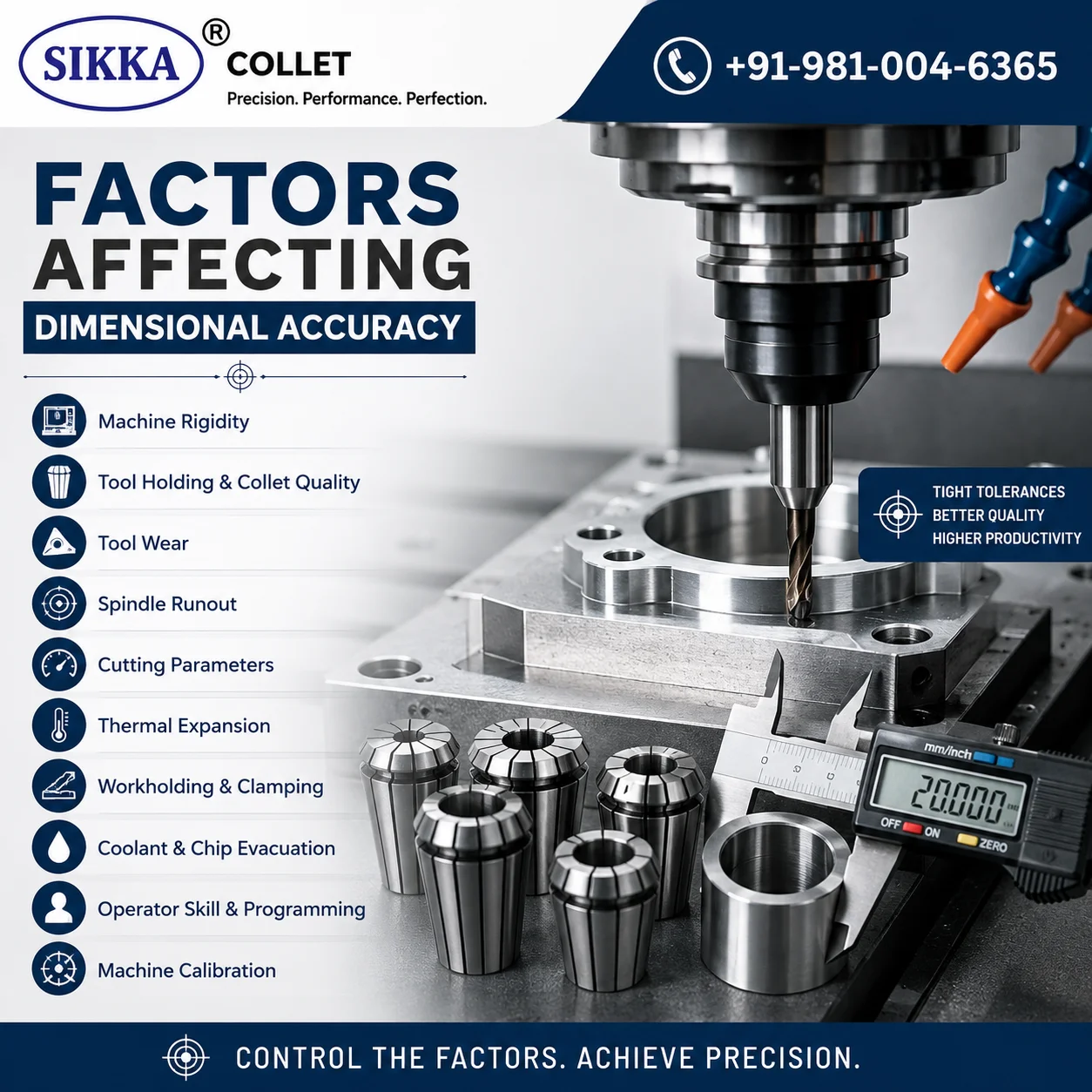
Factors Affecting Dimensional Accuracy include machine rigidity, spindle runout, tool condition, collet quality, cutting parameters, workholding, thermal expansion, coolant performance, and operator practices. Ignoring even one of these factors can increase rejection rates, reduce productivity, and shorten tool life.
This guide explains the most important Factors Affecting Dimensional Accuracy and how manufacturers can improve machining consistency using the right machining practices and precision collets.
What is Dimensional Accuracy?
Dimensional accuracy refers to how closely the final machined component matches its specified dimensions on the engineering drawing. The smaller the deviation from the intended size, the higher the dimensional accuracy.
High dimensional accuracy helps manufacturers:
- Maintain tight tolerances.
- Improve product quality.
- Reduce material waste.
- Lower production costs.
- Increase customer satisfaction.
- Ensure proper component assembly.
Understanding the Factors Affecting Dimensional Accuracy allows machine shops to achieve repeatable results with fewer quality issues.
1. Machine Tool Rigidity
Machine rigidity is one of the biggest Factors Affecting Dimensional Accuracy. A machine with poor structural rigidity vibrates during machining. These vibrations create dimensional variations and poor surface finish.
Common causes include:
- Worn guideways
- Loose spindle bearings
- Machine bed deformation
- Poor maintenance
- Weak machine structure
A rigid CNC machine keeps the cutting tool stable throughout the machining cycle. This improves repeatability and reduces tolerance variation.
2. Collet Quality and Tool Holding System
The tool holding system directly influences machining precision. A poor-quality collet cannot maintain proper concentricity. This increases runout and affects dimensional accuracy.
Precision ER Collets provide uniform 360-degree gripping around the cutting tool. This reduces vibration and improves cutting stability. Similarly, high-quality Collet Chucks ensure consistent clamping force during machining. :contentReference[oaicite:0]{index=0}
Using the correct collet helps:
- Reduce spindle runout.
- Improve tool concentricity.
- Increase cutting stability.
- Maintain tighter tolerances.
- Extend tool life.
Among all the Factors Affecting Dimensional Accuracy, tool holding quality is often underestimated. However, it directly controls how accurately the cutting tool performs.
3. Cutting Tool Condition
Tool wear gradually reduces machining accuracy. A worn cutting edge generates excessive cutting forces. It also produces poor chip formation and inconsistent dimensions.
Signs of worn tools include:
- Poor surface finish
- Oversized holes
- Tool chatter
- Excessive heat generation
- Higher spindle load
Regular inspection and timely replacement help eliminate one of the major Factors Affecting Dimensional Accuracy.
4. Spindle Runout
Spindle runout refers to the deviation of the spindle’s rotational axis from its true center. Even a few microns of runout can create dimensional errors during high-speed machining.
High spindle runout causes:
- Uneven cutting.
- Poor hole accuracy.
- Shorter tool life.
- Vibration.
- Inconsistent surface finish.
Combining precision spindle maintenance with premium DIN Collets significantly improves machining consistency. :contentReference[oaicite:1]{index=1}
5. Cutting Parameters
Incorrect machining parameters remain one of the most common Factors Affecting Dimensional Accuracy. Even the best machine cannot produce accurate parts if speed, feed, and depth of cut are not properly optimized.
Important machining parameters include:
- Cutting speed
- Feed rate
- Depth of cut
- Tool engagement
- Step-over value
Very high feed rates may cause tool deflection. Extremely low feeds may generate rubbing instead of cutting. Both situations reduce dimensional accuracy.
6. Workpiece Material Properties
Different materials behave differently during machining. Material hardness, toughness, and thermal expansion all influence machining precision.
For example:
- Aluminium expands quickly with heat.
- Stainless steel generates higher cutting temperatures.
- Titanium creates greater cutting forces.
- Hardened steel increases tool wear.
Understanding material behaviour helps machinists minimise the Factors Affecting Dimensional Accuracy during production.
7. Thermal Expansion
Heat generation is unavoidable during machining. The spindle, cutting tool, workpiece, and machine structure all expand as temperature rises.
This thermal expansion changes actual machining dimensions.
Common heat sources include:
- High spindle speeds
- Heavy cutting loads
- Poor coolant flow
- Long machining cycles
Maintaining stable temperatures and using proper coolant significantly reduces thermal errors. This is why thermal expansion remains one of the most critical Factors Affecting Dimensional Accuracy in precision CNC machining.
8. Workholding and Clamping Stability
The workpiece must remain completely stable throughout machining. Poor workholding allows slight movement during cutting. Even minor movement creates dimensional variations.
Reliable fixtures, precision vises, hydraulic clamps, and quality collet systems improve machining stability.
You can also understand how proper gripping affects machining precision in our guide on Impact of Collet Selection on Surface Finish and Tolerance.
Stable workholding eliminates another important group of Factors Affecting Dimensional Accuracy and ensures repeatable machining performance.
Factors Affecting Dimensional Accuracy in CNC Machining
Dimensional accuracy plays a critical role in precision machining. Even a small variation in size can affect product performance, assembly, and quality. Industries such as aerospace, automotive, medical, electronics, and die & mould manufacturing demand components with tight tolerances. Achieving consistent dimensional accuracy requires much more than a high-quality cutting tool. Every stage of the machining process contributes to the final result.
Factors Affecting Dimensional Accuracy include machine rigidity, spindle runout, tool condition, collet quality, cutting parameters, workholding, thermal expansion, coolant performance, and operator practices. Ignoring even one of these factors can increase rejection rates, reduce productivity, and shorten tool life.
This guide explains the most important Factors Affecting Dimensional Accuracy and how manufacturers can improve machining consistency using the right machining practices and precision collets.
What is Dimensional Accuracy?
Dimensional accuracy refers to how closely the final machined component matches its specified dimensions on the engineering drawing. The smaller the deviation from the intended size, the higher the dimensional accuracy.
High dimensional accuracy helps manufacturers:
- Maintain tight tolerances.
- Improve product quality.
- Reduce material waste.
- Lower production costs.
- Increase customer satisfaction.
- Ensure proper component assembly.
Understanding the Factors Affecting Dimensional Accuracy allows machine shops to achieve repeatable results with fewer quality issues.
1. Machine Tool Rigidity
Machine rigidity is one of the biggest Factors Affecting Dimensional Accuracy. A machine with poor structural rigidity vibrates during machining. These vibrations create dimensional variations and poor surface finish.
Common causes include:
- Worn guideways
- Loose spindle bearings
- Machine bed deformation
- Poor maintenance
- Weak machine structure
A rigid CNC machine keeps the cutting tool stable throughout the machining cycle. This improves repeatability and reduces tolerance variation.
2. Collet Quality and Tool Holding System
The tool holding system directly influences machining precision. A poor-quality collet cannot maintain proper concentricity. This increases runout and affects dimensional accuracy.
Precision ER Collets provide uniform 360-degree gripping around the cutting tool. This reduces vibration and improves cutting stability. Similarly, high-quality Collet Chucks ensure consistent clamping force during machining. :contentReference[oaicite:0]{index=0}
Using the correct collet helps:
- Reduce spindle runout.
- Improve tool concentricity.
- Increase cutting stability.
- Maintain tighter tolerances.
- Extend tool life.
Among all the Factors Affecting Dimensional Accuracy, tool holding quality is often underestimated. However, it directly controls how accurately the cutting tool performs.
3. Cutting Tool Condition
Tool wear gradually reduces machining accuracy. A worn cutting edge generates excessive cutting forces. It also produces poor chip formation and inconsistent dimensions.
Signs of worn tools include:
- Poor surface finish
- Oversized holes
- Tool chatter
- Excessive heat generation
- Higher spindle load
Regular inspection and timely replacement help eliminate one of the major Factors Affecting Dimensional Accuracy.
4. Spindle Runout
Spindle runout refers to the deviation of the spindle’s rotational axis from its true center. Even a few microns of runout can create dimensional errors during high-speed machining.
High spindle runout causes:
- Uneven cutting.
- Poor hole accuracy.
- Shorter tool life.
- Vibration.
- Inconsistent surface finish.
Combining precision spindle maintenance with premium DIN Collets significantly improves machining consistency. :contentReference[oaicite:1]{index=1}
5. Cutting Parameters
Incorrect machining parameters remain one of the most common Factors Affecting Dimensional Accuracy. Even the best machine cannot produce accurate parts if speed, feed, and depth of cut are not properly optimized.
Important machining parameters include:
- Cutting speed
- Feed rate
- Depth of cut
- Tool engagement
- Step-over value
Very high feed rates may cause tool deflection. Extremely low feeds may generate rubbing instead of cutting. Both situations reduce dimensional accuracy.
6. Workpiece Material Properties
Different materials behave differently during machining. Material hardness, toughness, and thermal expansion all influence machining precision.
For example:
- Aluminium expands quickly with heat.
- Stainless steel generates higher cutting temperatures.
- Titanium creates greater cutting forces.
- Hardened steel increases tool wear.
Understanding material behaviour helps machinists minimise the Factors Affecting Dimensional Accuracy during production.
7. Thermal Expansion
Heat generation is unavoidable during machining. The spindle, cutting tool, workpiece, and machine structure all expand as temperature rises.
This thermal expansion changes actual machining dimensions.
Common heat sources include:
- High spindle speeds
- Heavy cutting loads
- Poor coolant flow
- Long machining cycles
Maintaining stable temperatures and using proper coolant significantly reduces thermal errors. This is why thermal expansion remains one of the most critical Factors Affecting Dimensional Accuracy in precision CNC machining.
8. Workholding and Clamping Stability
The workpiece must remain completely stable throughout machining. Poor workholding allows slight movement during cutting. Even minor movement creates dimensional variations.
Reliable fixtures, precision vises, hydraulic clamps, and quality collet systems improve machining stability.
You can also understand how proper gripping affects machining precision in our guide on Impact of Collet Selection on Surface Finish and Tolerance.
Stable workholding eliminates another important group of Factors Affecting Dimensional Accuracy and ensures repeatable machining performance.