
Tapping collet failures can reduce machining accuracy, damage expensive tools, and increase production downtime. In many CNC machining operations, even a small collet issue can affect thread quality and overall machine performance. Therefore, manufacturers must understand the common reasons behind tapping collet failures and the right ways to prevent them.
Modern industries depend on precision tapping for consistent threading results. However, poor maintenance, wrong collet selection, and excessive runout often create serious machining problems. With proper inspection and the use of high-quality tapping systems, manufacturers can improve tool life and reduce costly errors.
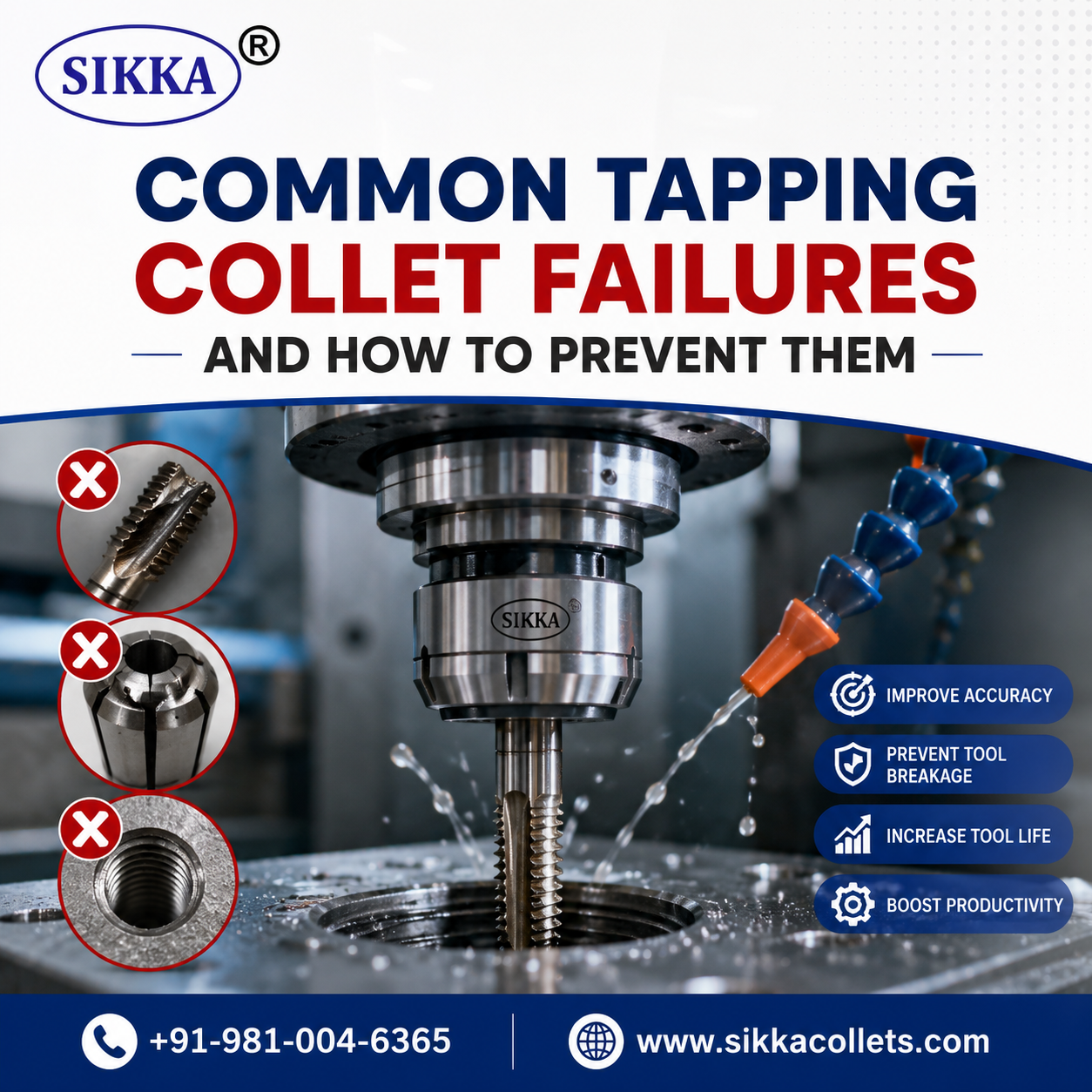
Introduction to Common Tapping Collet Failures
Tapping collets play an important role in holding taps securely during threading operations. These collets maintain stability, reduce vibration, and help achieve accurate threads. Still, many machine shops experience tapping collet failures because of poor handling or low-quality tooling components.
Problems such as tap slippage, thread inconsistency, vibration, and broken taps are often linked to damaged or worn collets. As a result, operators should inspect collets regularly and use reliable tooling systems for demanding industrial applications.
Main Causes of Tapping Collet Failures
Poor Collet Alignment and Runout
Misalignment is one of the biggest causes of tapping collet failures. When the collet does not align properly with the spindle, it creates excessive runout. Consequently, the tap moves unevenly during operation and produces poor thread quality.
High runout also increases tool wear and vibration. Over time, this issue may damage both the tap and the machine spindle. Using precision ER Collets can help improve concentricity and machining accuracy.
Using Low-Quality Tapping Collets
Low-grade collets often fail under heavy machining loads. Inferior materials cannot maintain proper gripping force, especially during high-speed tapping operations. Therefore, manufacturers should always choose hardened and precision-engineered collets.
Reliable products like tapping collets designed for industrial machining provide better holding strength and longer operational life.
Improper Clamping Pressure
Excessive or insufficient clamping pressure can also lead to tapping collet failures. If the clamping force is too low, the tap may slip during operation. On the other hand, over-tightening may damage the collet structure.
Operators should always follow the recommended torque specifications for safe and stable machining performance.
Lack of Regular Maintenance
Dust, metal chips, and coolant residue often accumulate inside collets. As a result, gripping performance decreases and tapping accuracy suffers. Regular cleaning helps maintain smooth operation and prevents unnecessary wear.
Routine inspection also helps identify cracks, deformation, or surface damage before major failures occur.
Wrong Collet Selection for the Application
Different tapping operations require different collet systems. Using the wrong size or type can reduce machining efficiency and increase tool breakage risks.
For example, precision ER Tap Collets DIN 6499 are widely preferred for accurate thread cutting and secure tap holding in CNC applications.
Signs That Indicate Tapping Collet Problems
Several warning signs indicate possible tapping collet failures. Operators should never ignore these symptoms because they may lead to major production issues.
- Frequent tap breakage
- Irregular thread quality
- Excessive machine vibration
- Tap slippage during operation
- Visible wear marks on the collet
- Reduced machining precision
Early detection helps prevent expensive repairs and improves production efficiency.
How to Prevent Common Tapping Collet Failures?
Choose High-Precision Tapping Collets
Precision-engineered collets provide better gripping force and reduce runout problems. Therefore, investing in high-quality tooling components improves machining stability and thread consistency.
Many manufacturers also use precision collet chucks to improve tool holding performance in CNC machining operations.
Inspect Collets Before Every Operation
Regular inspection prevents unexpected failures. Operators should check for cracks, rust, wear, and internal contamination before starting machining work.
Simple preventive maintenance can significantly reduce tapping collet failures and increase tool life.
Maintain Proper Lubrication and Cleaning
Clean collets provide stronger gripping performance and smoother operation. Therefore, machine shops should remove chips and coolant residue after every production cycle.
Proper lubrication also reduces friction and prevents premature wear.
Use the Correct ER Tap Collet System
Choosing the correct collet size and standard improves threading accuracy. Precision ER tap collets maintain stable clamping pressure and reduce vibration during tapping operations.
Industrial machining experts often follow tooling standards recommended by organizations like the International Organization for Standardization (ISO) for better operational consistency.
Reduce Machine Vibration and Runout
Machine vibration affects both thread quality and tool life. Therefore, operators should regularly check spindle condition, tool alignment, and machine balancing.
Reducing vibration helps improve surface finish and minimizes tapping collet failures.
Importance of Quality Tapping Collets in CNC Machining
High-quality tapping collets improve machining efficiency, thread precision, and production stability. They also reduce downtime caused by broken taps and inconsistent threading.
In industries where precision is critical, reliable tooling systems help maintain production quality and reduce operating costs.
Why Manufacturers Prefer Precision ER Tap Collets?
Precision ER tap collets provide excellent concentricity and gripping force. As a result, they support smoother tapping operations and improve overall machining performance.
Many industrial manufacturers prefer precision-engineered systems because they offer better durability and consistent threading accuracy under heavy production loads.
About Sikka Sales Corporation
Sikka Sales Corporation is a trusted manufacturer and supplier of precision collets and industrial tooling solutions in India. Sikka Precision Technologies is a professionally operated and owned company that produces high-quality precision collets using premium-grade steel materials.
The company supplies a wide range of industrial products for CNC machining and precision engineering applications. Its products are known for durability, accuracy, and reliable performance across different industries.
Sikka Sales Corporation 31/3f, Street No-1, Anand Parbat, Industrial Area, New Delhi-110005 (INDIA) PH: +91-981-004-6365
Find the Google Map location of one of the best collets manufacturers here: Sikka Sales Corporation Location
Conclusion
Tapping collet failures can create serious machining problems if ignored. However, proper maintenance, accurate collet selection, and high-quality tooling systems can prevent most issues. Manufacturers should always inspect tooling components regularly and use precision-engineered collets for reliable performance.
By reducing runout, improving alignment, and maintaining clean collet systems, machine shops can increase productivity and achieve better thread quality in CNC machining operations.